Books

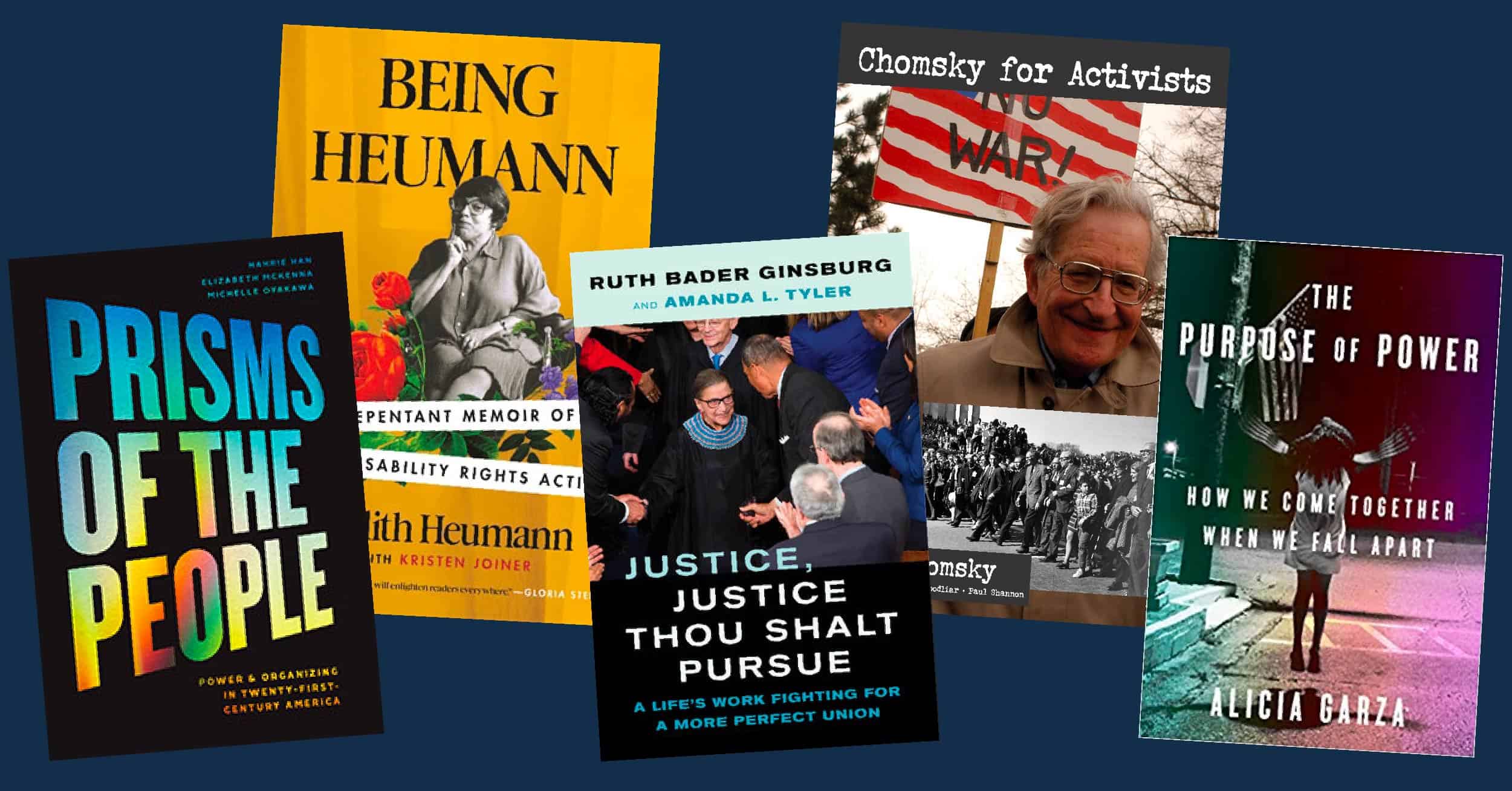
Prisms of the People: Power and Organizing in Twenty First Century America
Hahrie Han, Elizabeth McKenna, Michelle Oyakawa, 2021, University of Chicago Press
“Grassroots organizing and collective action have always been fundamental to American democracy but have been burgeoning since the 2016 election, as people struggle to make their voices heard in this moment of societal upheaval. Unfortunately much of that action has not had the kind of impact participants might want, especially among movements representing the poor and marginalized who often have the most at stake when it comes to rights and equality. Yet, some instances of collective action have succeeded.
What’s the difference between a movement that wins victories for its constituents, and one that fails? What are the factors that make collective action powerful?
Prisms of the People addresses those questions and more. Using data from six movement organizations—including a coalition that organized a 104-day protest in Phoenix in 2010 and another that helped restore voting rights to the formerly incarcerated in Virginia—Hahrie Han, Elizabeth McKenna, and Michelle Oyakawa show that the power of successful movements most often is rooted in their ability to act as “prisms of the people,” turning participation into political power just as prisms transform white light into rainbows. Understanding the organizational design choices that shape the people, their leaders, and their strategies can help us understand how grassroots groups achieve their goals.
Linking strong scholarship to a deep understanding of the needs and outlook of activists, Prisms of the People is the perfect book for our moment—for understanding what’s happening and propelling it forward.” – University of Chicago Press

Chomsky for Activists
Noam Chomsky, Charles Derver, Suren Moodliar, Paul Shannon, 2021, Routledge
“Those who regard him as a “doom and gloom” critic will find an unexpected Chomsky in these pages. Here the world-renowned author speaks for the first time in depth about his career in activism, and his views and tactics. Chomsky offers new and intimate details about his life-long experience as an activist, revealing him as a critic with deep convictions and many surprising insights about movement strategies. The book points to new directions for activists today, including how the crises of the Coronavirus and the economic meltdown are exploding in the critical 2020 US presidential election year. Readers will find hope and new pathways toward a sustainable, democratic world.” – Routledge
Contents page
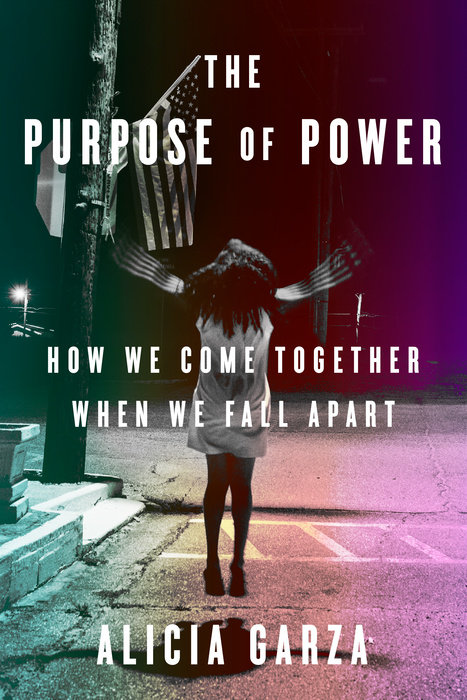
The Purpose of Power: How We Come Together When We Fall Apart
Alicia Garza, One World, 2020
Frantz Fanon said that “each generation must, out of relative obscurity, discover its mission, fulfill it, or betray it.” This is the story of movements: Each generation has a mission that has been handed to it by those who came before. It is up to us to determine whether we will accept that mission and work to accomplish it, or whether we will turn away and fail to achieve it. – Alicia Garza
An essential guide to building transformative movements to address the challenges of our time, from one of the country’s leading organizers and a co-creator of Black Lives Matter. In 2013, Alicia Garza wrote what she called “a love letter to Black people” on Facebook, in the aftermath of the acquittal of the man who murdered seventeen-year-old Trayvon Martin. Garza wrote:
Black people. I love you. I love us. Our lives matter. With the speed and networking capacities of social media, #BlackLivesMatter became the hashtag heard ’round the world. But Garza knew even then that hashtags don’t start movements—people do. Long before #BlackLivesMatter became a rallying cry for this generation, Garza had spent the better part of two decades learning and unlearning some hard lessons about organizing. The lessons she offers are different from the “rules for radicals” that animated earlier generations of activists, and diverge from the charismatic, patriarchal model of the American civil rights movement. She reflects instead on how making room amongst the woke for those who are still awakening can inspire and activate more people to fight for the world we all deserve.This is the story of one woman’s lessons through years of bringing people together to create change. Most of all, it is a new paradigm for change for a new generation of changemakers, from the mind and heart behind one of the most important movements of our time.” – Random House Books
Before we can know where we’re going—which is the first question for anything that calls itself a movement—we need to know where we are, who we are, where we came from, and what we care most about in the here and now. That’s where the potential for every movement begins. – Alicia Garza

Being Heumann: An Unrepentant Memoir of a Disability Rights Activist
Judith Heumann, Kristen Joines, 2021, Beacon Press
“One of the most influential disability rights activists in US history tells her personal story of fighting for the right to receive an education, have a job, and just be human.
A story of fighting to belong in a world that wasn’t built for all of us and of one woman’s activism—from the streets of Brooklyn and San Francisco to inside the halls of Washington—Being Heumann recounts Judy Heumann’s lifelong battle to achieve respect, acceptance, and inclusion in society.
Paralyzed from polio at eighteen months, Judy’s struggle for equality began early in life. From fighting to attend grade school after being described as a “fire hazard” to later winning a lawsuit against the New York City school system for denying her a teacher’s license because of her paralysis, Judy’s actions set a precedent that fundamentally improved rights for disabled people.
As a young woman, Judy rolled her wheelchair through the doors of the US Department of Health, Education, and Welfare in San Francisco as a leader of the Section 504 Sit-In, the longest takeover of a governmental building in US history. Working with a community of over 150 disabled activists and allies, Judy successfully pressured the Carter administration to implement protections for disabled peoples’ rights, sparking a national movement and leading to the creation of the Americans with Disabilities Act.
Candid, intimate, and irreverent, Judy Heumann’s memoir about resistance to exclusion invites readers to imagine and make real a world in which we all belong.” – Beacon Press
We Do This ‘Til We Free Us: Abolitionist Organizing and Transforming Justice
Mariame Kaba, 2021, Haymarket Books
“A reflection on prison industrial complex abolition and a vision for collective liberation from organizer and educator Mariame Kaba.
Organizing is both science and art. It is thinking through a vision, a strategy, and then figuring out who your targets are, always being concerned about power, always being concerned about how you’re going to actually build power in order to be able to push your issues, in order to be able to get the target to actually move in the way that you want to.
What if social transformation and liberation isn’t about waiting for someone else to come along and save us? What if ordinary people have the power to collectively free ourselves? In this timely collection of essays and interviews, Mariame Kaba reflects on the deep work of abolition and transformative political struggle.
With chapters on seeking justice beyond the punishment system, transforming how we deal with harm and accountability, and finding hope in collective struggle for abolition, Kaba’s work is deeply rooted in the relentless belief that we can fundamentally change the world. As Kaba writes, “Nothing that we do that is worthwhile is done alone.” ” – Haymarket Books

Justice, Justice Thou Shalt Pursue: A Life’s Work Fighting For A More Perfect Union
Ruth Bader Ginsburg, Amanda L. Tyler, 2001, University of California Press
“Tracing the long history of Ruth Bader Ginsburg’s work for gender equality and a “more perfect Union.
In the fall of 2019, Justice Ruth Bader Ginsburg visited the University of California, Berkeley School of Law to deliver the first annual Herma Hill Kay Memorial Lecture in honor of her friend, the late Herma Hill Kay, with whom Ginsburg had coauthored the very first casebook on sex-based discrimination in 1974. Justice, Justice Thou Shalt Pursue is the result of a period of collaboration between Ginsburg and Amanda L. Tyler, a Berkeley Law professor and former Ginsburg law clerk. During her visit to Berkeley, Justice Ginsburg told her life story in conversation with Tyler. In this collection, the two bring together that conversation and other materials—many previously unpublished—that share details from Justice Ginsburg’s family life and long career. These include notable briefs and oral arguments, some of Ginsburg’s last speeches, and her favorite opinions that she wrote as a Supreme Court justice (many in dissent), along with the statements that she read from the bench in those important cases. Each document was chosen by Ginsburg and Tyler to tell the story of the litigation strategy and optimistic vision that were at the heart of Ginsburg’s unwavering commitment to the achievement of “a more perfect Union.”
In a decades-long career, Ruth Bader Ginsburg was an advocate and jurist for gender equality and for ensuring that the United States Constitution leaves no person behind. Her work transformed not just the American legal landscape, but American society more generally. Ginsburg labored tirelessly to promote a Constitution that is ever more inclusive and that allows every individual to achieve their full human potential.
As revealed in these pages, in the area of gender rights, Ginsburg dismantled long-entrenched systems of discrimination based on outdated stereotypes by showing how such laws hold back both genders.
And as also shown in the materials brought together here, Justice Ginsburg had a special ability to appreciate how the decisions of the high court impact the lived experiences of everyday Americans. The passing of Justice Ruth Bader Ginsburg in September 2020 as this book was heading into production was met with a public outpouring of grief. With her death, the country lost a hero and national treasure whose incredible life and legacy made the United States a more just society and one in which “We the People,” for whom the Constitution is written, includes everyone.” – University of California Press