
Introduction
This is an adaption of a talk Iain McIntyre gave at Counteract’s Art and Heart gathering in which he outlines a variety of means of spreading messages and information in a creative way.
Many of the formats listed and displayed below are fairly well known, but include examples that show how a little tweaking or artistic effort can make them more attention grabbing.
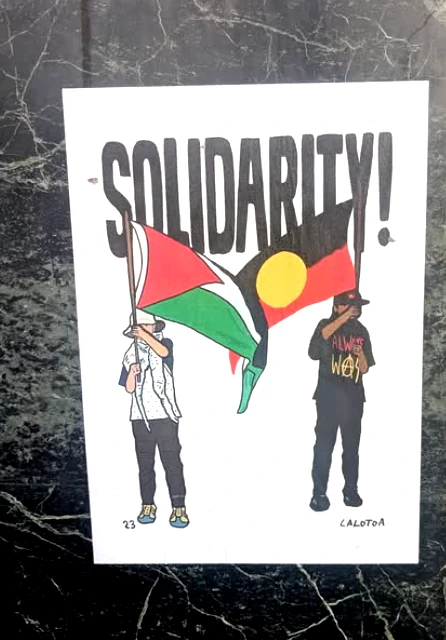
Posters
Hard copy posters can be professionally printed or run off on your computer or a photocopier. As with most of the forms discussed here these can incorporate straight down the line messages or parodies and reappropriated culture jams of everyday images. They can be pinned or pasted in various places or replace mainstream messaging within public transport hoardings.

Whilst these are typically new creations, important anniversaries and events can be marked by pasting up posters from other eras, as was done in Brunswick during 2016 to celebrate 100 years since the first conscription referendum ended in victory for those opposing militarism and young men being forced to kill and die for the British Empire.

Stickers
As with posters good placement is everything, whether it’s at a traffic crossing, on the back of your car or in the toilets of your least favourite corporation.
Imaginative placement and point of distribution can make an otherwise straightforward item more exciting.
Putting up stickers, posters and stencils in the suburbs, where such items are less commonly seen, will likely grab more attention from passers-by than at a university or in city laneways.

During boycott campaigns involving old growth forest, apartheid and other issues campaigners placed stickers on products and shelves in retailers, as well as company trucks.

Badges, T-shirts and other Wearables
To fundraise and fly the flag. Flying the flag can, of course, also be done by flying an actual flag.

Postcards
Postcards can act as mini-posters by being left at various places or displayed on the fridge, as well as sent en masse to key decision makers and/or evil doers.

Leaflets, Magazines, Newsletters
Print items can always be made more attractive or arresting via the addition of striking graphics or by being printed in non-standard formats.
Handing out flyers inside a supermarket or bank can draw attention to a product in a way advertisers would prefer you not do.
Slipping leaflets in with advertising materials or packages can make a delivery job more rewarding.
Avoid the pitfalls or jamming in too much text and not enough pix and engage artists to produce eye catching covers.

Comics, Prose and Poems
In themselves or as part of publications, comics, prose and poems, are all ways to engage with people and tap into different ways of thinking, understanding, and feeling beyond the usual informational and agitational report, pamphlet, leaflet, and website mode.
Memes
Memes are perhaps a little played out due to mass production, but very easy to create. If you can get a copycat or chain effect going then you might even topple the powerful.
Petitions
There’s generally not much you can do with the formatting and layout of hard copy petitions due to parliamentary rules, but there’s no reason you can’t deliver them in interesting ways.
Going door to door activists collected 30,000 signatures from women in Victoria demanding the right to vote in 1891. They presented it to Parliament in the form of a giant 260 metre scroll which took three people three hours to unroll from spool to spool thereby demonstrating the huge level of support for their cause.
Games
Its possible to create a computer or board game about your campaign or one which imparts and explores general skills for activism. As part of their report about working conditions at Amazon the ABC created this one.
Alternatively you can get people at events to engage in group games or ‘gamify’ your next protest. Bonus points for the first one to lock on to the drilling rig…
Other Means of Mass Messaging
It’s easy to forget just how recent a phenomenon memes are so always be on the lookout for new and emerging means of mass messaging. Or, as with all the tactics and forms explored in these articles, look back to the past for forgotten ones that can seem bright shiny new.
During the anti-conscription campaigns of the 1970s postal worker John Zarb’s union placed a special yellow franking stamp on thousands of letters which protested his two year sentence for resisting conscription.
NZ activists printed their own postage stamps with messages and graphics in the 1980s which bizarrely later became collectibles. Thanks to Australia Post’s bespoke stamp service anti-coal activists created their own stamps in the late 2010s.

Explore Further
- Creative Activism: Start Here
- More Arts and Creativity Resources collected by The Commons Library
- How Artistic Activism can move us Toward a Better Future
- Creative Activism: An Antidote to Despair
- Changing the world via shock and beauty: Visual Artworks
- Pranks, Performances and Protestivals: Public Events
- Top Tips for Advanced Artistic Activism
- The Copenhagen Experiment: Measuring the relative effectiveness of creative vs. conventional forms of activism
- Art and Campaigning: Lessons about the Effective Use of Art in Campaigns
- How Artistic Activism can move us Toward a Better Future
- A Better World is Paintable: How to make Banners, Stencils, Street Murals, Parachute Banners, and More!
About the Author
Iain McIntyre is an Honorary Fellow at the University of Melbourne and a Gerda Henkel post-doctoral scholar. A member of the Commons Library team, he is the author, editor and co-editor of 12 books, including Environmental Blockades: Obstructive Direct Action and the History of the Environmental Movement (Routledge, 2021) and the Locus award winning Dangerous Visions and New Worlds: Radical Science Fiction, 1950-1985 (PM Press, 2023). He has contributed to various journals and anthologies with his most recent article being ‘Parching for Principle: Hotel Boycotts in Regional Australia’, which appeared in the November 2024 issue of Labour History.