

Introduction
Tertiary students have often been heavily involved in political activism, not least that which concerns the conditions experienced at universities and other places of higher education. Following the abolition of free higher education in Australia during the late 1980s a new wave of student activism took off, involving demonstrations, occupations and other forms of protest.
Student Activism Over Time
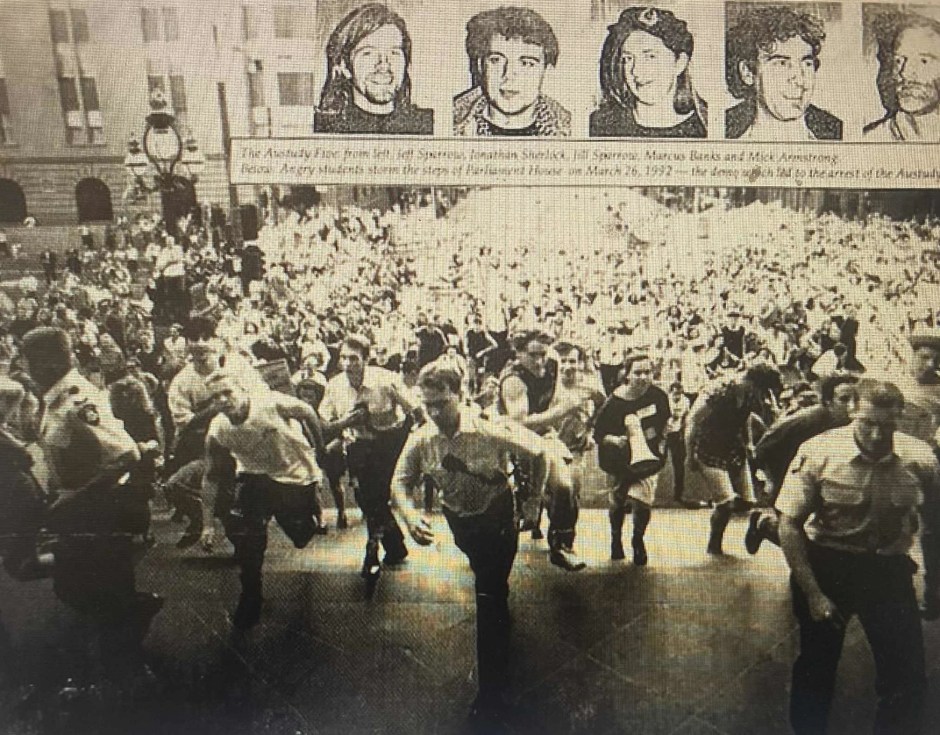
‘I am not a piece of value added human capital’: Student activism after the Higher Education Contribution Scheme, 1989-96
On March 25, 1992, thousands of students in Melbourne protested against proposed compulsory Austudy loans, storming Parliament House steps and sparking a standoff that forced police to release four arrestees. The campaign exemplified the tensions of the period during which free education was phased out in Australia, where neoliberal “academic capitalism” increasingly framed education as personal investment rather than public good.
This article covers notable protests including RMIT’s “Give Space a Chance” rally which addressed overcrowding, and a Macquarie University occupation which targeted executive pay. The 1994 ANU anti-fees campaign is shown to have sparked national protests, culminating in 15,000 students demonstrating nationally on March 23, 1995, successfully blocking domestic upfront fees.
The article is available to read as in PDF form.
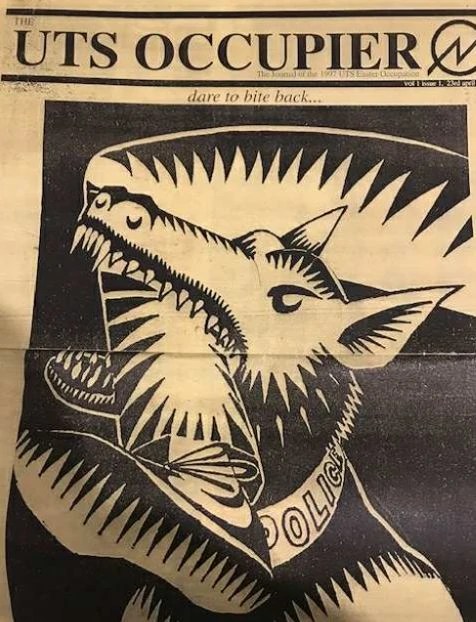
‘Taking the fight to the powers that be’: Student activism under John Howard
Following John Howard’s 1996 election victory, the government cut university funding substantially, increased HECS, and introduced upfront fees—policies that initially galvanized mass protests. Student activism entered a turbulent era defined by creative militancy and direct action.
The movement peaked between 1997-1999 with occupations, most notably at UTS, where activists used elaborate planning to occupy the Chancellery for three days. RMIT’s 19-day occupation and a Melbourne University sit-in demonstrated growing tactical innovation.
This article chronicles these events and the connections with broader causes, particularly the Jabiluka uranium mine blockade, where student activists applied direct-action skills to environmental campaigning. A new phase of activism is shown to have emerged in 2003-2004 against further fee increases, featuring blockades at seven universities and occupations at Monash and RMIT.
The article is available to read in PDF form.
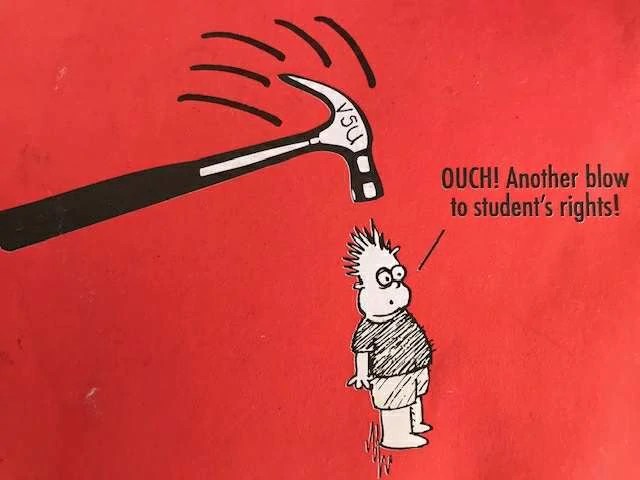
‘A depoliticising project’: the struggle against Voluntary Student Unionism, 1993-2006
Voluntary Student Unionism (VSU)—abolishing compulsory student union fees—was a major conservative project from the 1990s onwards, targeting the financial base of student activism. For activists, VSU meant “kneecapping” the student movement by stripping resources for political organising and forcing unions to commercialise their services.
State-level VSU passed in Western Australia 1994 and Victoria in 1994, establishing models for federal legislation. As this article details, rallies involving thousands of students responded to the situation, and direct action was also used. The ALP’s 2011 Student Services and Amenities Fee later restored some services but excluded political funding. Nevertheless, as shown by recent campaigns regarding university ties to genocide, student activism continues.
The article is available to read in PDF form.
Explore Further
- People’s History of Australia Podcast
- ‘We saw ourselves as ratbags’: The Australian Student Environment Network
- The Revolution Begins in Bankstown! The 1999 University of Western Sydney Campus Occupation
- Hope & Solidarity in Global Student Movements for Palestine
- Inside the Student Movement that Forced Ireland’s Trinity College to Divest from Israel
- University of Sydney Students Uncover and Protest Discrimination of Aboriginal People in New South Wales, 1965
- For Educators Grappling with Student Protests, Here’s how to Play a Supporting Role
- Organising! A Remedy for Despair: How Workers at the University of Melbourne won back $45 million in Stolen Wages
- “When the Bombs Drop, School Stops” – Over 100 years of Australian School Strikes and Direct Action
- From Little Things Big Things Grow: Events That Changed Australia
- Activism and Campaign History: Start Here