Introduction
The Place Project was a place-based systems change project in lutruwita/Tasmania. It was funded by the Paul Ramsay Foundation and the Tasmanian Community Fund and auspiced by Burnie Works. From 2024 it brought together people from Burnie, Devonport, kinimathatakinta/George Town, Brighton and Clarence Plains, as well as a multicultural place-based stream. The project wrapped up at the end of September 2026.
We set out to learn what makes place-based work succeed in Tasmania and what each community knows and does in its own way.
The original plan didn’t last long once communities got involved. The project was reshaped by the people in it, through community-hosted Gatherings, rapid co-design sessions and a Sense Making Day. Along the way, people stopped waiting to be asked and started leading.
Communities told us they didn’t want big reports at the end. They wanted things that were useful, easy to share and handed back to the people whose knowledge they hold. Reading the Change is one of those things. A lot of reading, listening and thinking went on behind the project, and this list brings the best of it together in one place. Communities asked for it to live somewhere open and public, so people can keep finding it after the funding stops. That’s why it’s a resource on The Commons Social Change Library.
The list follows the seven domains of our Change Rubric (access the PDF here), a tool we developed to track how change was happening across the project. The domains are self-understanding and agency, voice and story, relationships and connection, engagement with the system, power and decision-making, the funding relationship, and structures and resources. Within each one, the Rubric maps a path from suspicion and waiting, through transactional and then deeper engagement and co-design, to communities leading and designing for themselves.
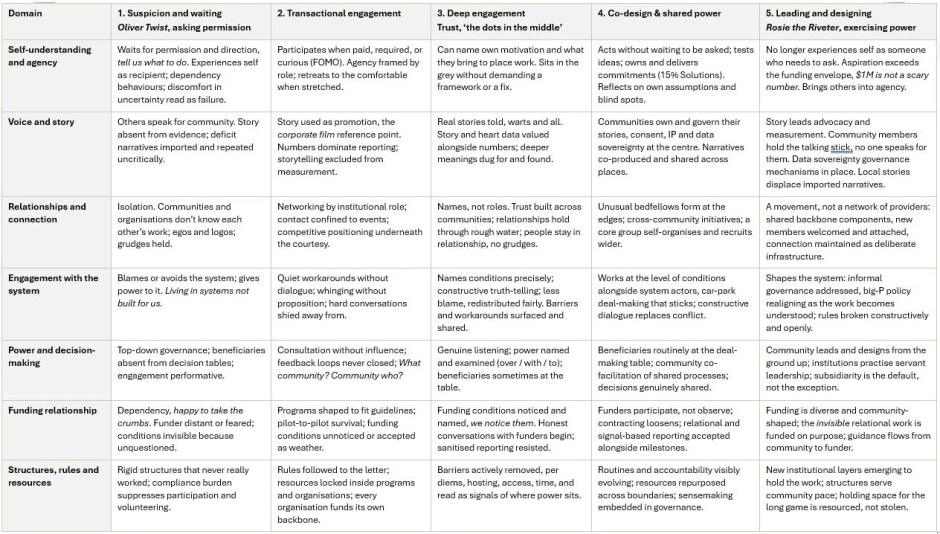
Reading the Change comes in three parts. Part One is seventeen picks, each with a short note on what it says and why it mattered to us. They include First Nations histories, a novel, and practical writing on co-design and systems change. Part Two is a wider list sorted by the seven domains, for anyone who wants to go deeper. Part Three is a toolkit of free methods that groups can use straight away. We hope the list keeps growing and gets used well beyond the project, as communities asked: keep the flame alight.
Part One: Top Seventeen Picks
Roughly in rubric order: self-understanding and agency, voice and story, relationships, engagement with the system, power and decision-making, funding relationship, structures and resources.
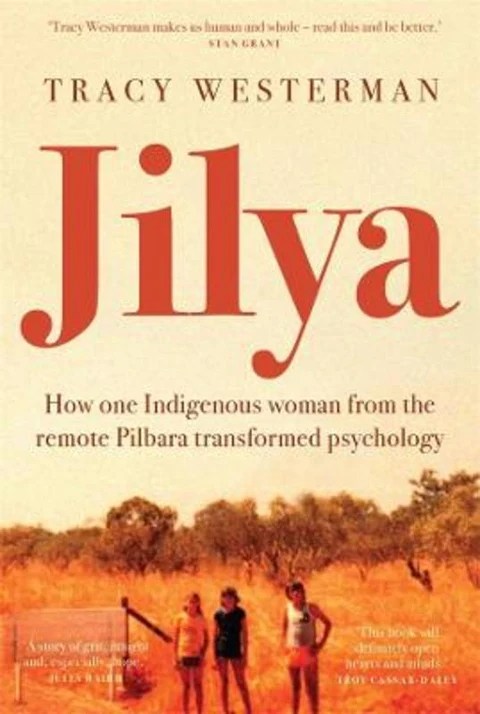
1. Jilya
Tracy Westerman (UQP, 2024)
Westerman is a Nyamal woman from the Pilbara and the first Aboriginal person in Australia to complete a PhD in Clinical Psychology. She has built a suite of programs, training and assessment tools without government funding.
2. Growing Out of the Modernity Metacrisis: A Sensing Heuristic for Seeding Alternative Futures
Karen Cieri and Yin Paradies (Australian Journal of Environmental Education, 2026)
The sensing seed. Built from Participatory Action Research across school education, health, social services, environment and decolonisation, which is to say: our territory. It organises around belonging, becoming and knowing. Read Karen Cieri’s blog version first at karencieri.wordpress.com.
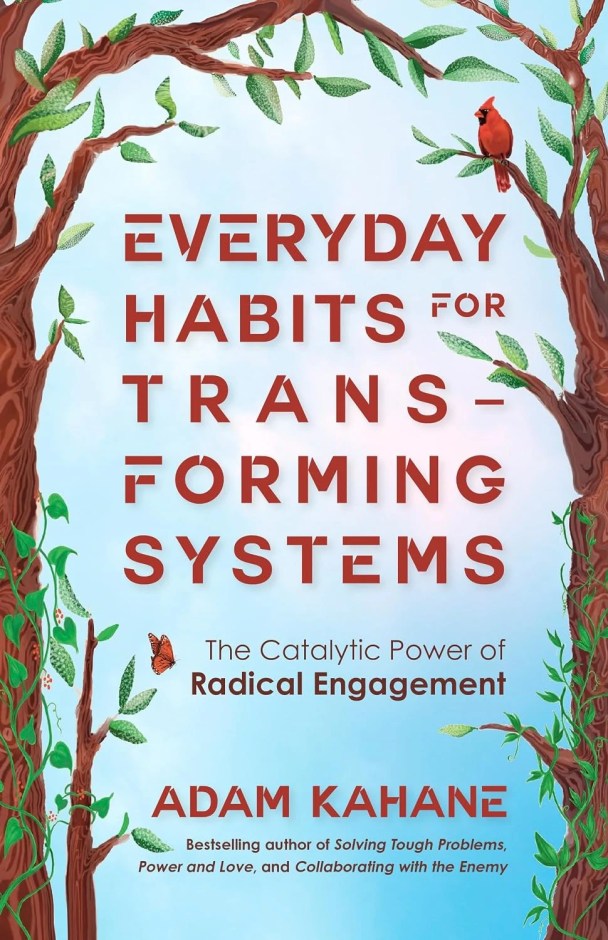
3. Everyday Habits for Transforming Systems
Adam Kahane (Berrett-Koehler, 2025)
Seven habits, drawn from hundreds of interviews with people doing this work. The one that matters most for us is habit four, working with cracks: a crack is a sign that for some people the system is not working, and an opportunity. The free excerpt covers exactly that chapter. His framing of radical engagement, leaning forward, hands-on, digging deep, persisting, reciprocally and relationally, is close to what the rubric calls stage four.
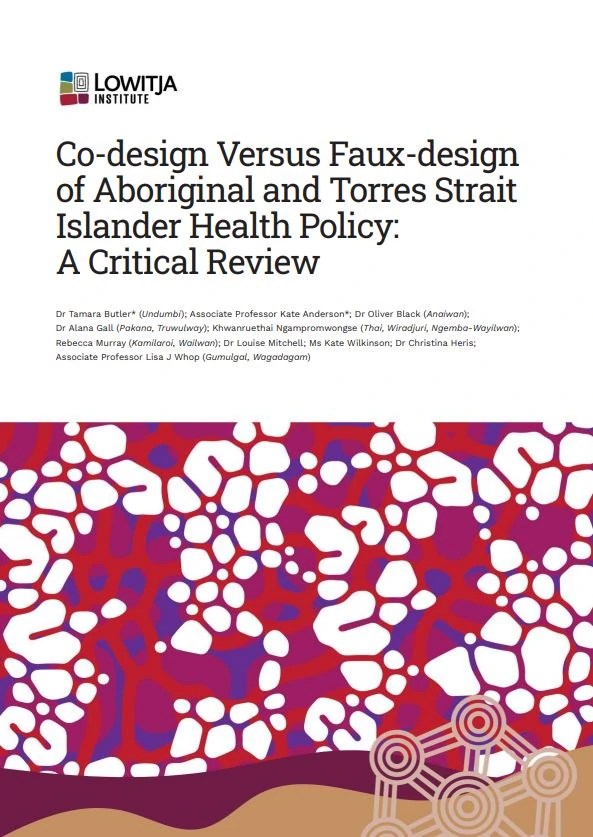
4. Co-design versus faux-design of Aboriginal and Torres Strait Islander health policy
Tamara Butler and colleagues, Lowitja Institute (2025)
Faux-design is their word for co-design that is tokenistic or superficial. The paper is generous about what real co-design needs: Aboriginal leadership, community benefit, cultural grounding, data sovereignty, and blunt about what stops it: hierarchical governance, rigid funding, and non-Indigenous actors not ceding control.
5. The Relational Work of Systems Change
Katherine Milligan, Juanita Zerda and John Kania (Stanford Social Innovation Review, 2022)
Systems are made up of people. Purely technical approaches will not shift power or change what people deeply believe. Quoting Brenda Zimmerman: the most important unit of analysis in a system is not the part, it is the relationship between the parts.
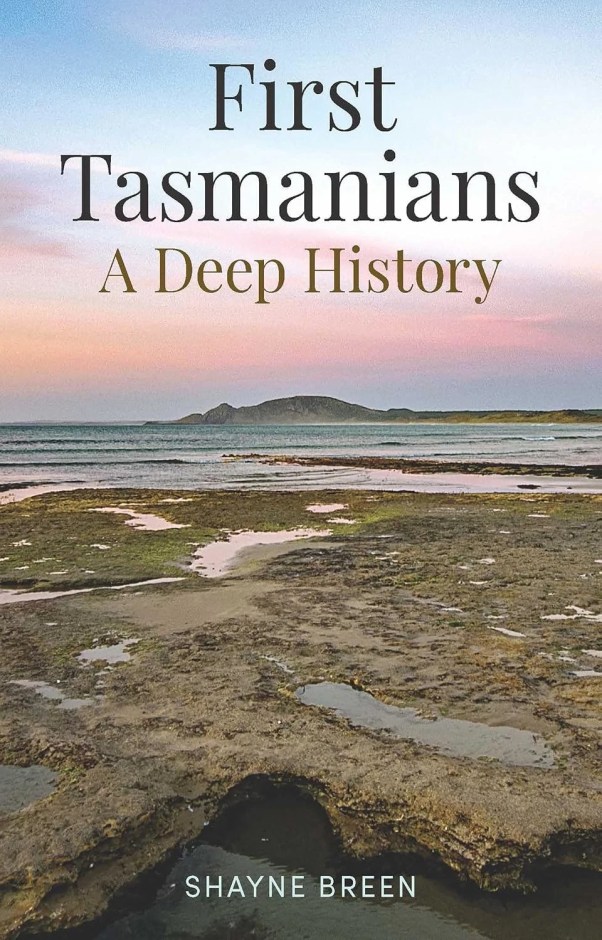
6. First Tasmanians: A Deep History
Shayne Breen (Miegunyah Press, 2025)
Forty thousand years of Aboriginal exploration, land settlement, hunting and controlled burning on this island, then thirty years in which it was destroyed. Breen worked closely with Tasmanian Aboriginal people for 35 years, helped introduce Aboriginal Studies at UTAS, and later helped revise the Aboriginal Studies curriculum in Tasmanian schools; the research was informed by regular consultation with senior First Tasmanians.

7. trouwerner
Aunty Patsy Cameron and Martin Flanagan (Magabala Books, 2025)
A conversation between Elder Aunty Patsy Cameron, Kate Warner, the 28th Governor of Tasmania, and journalist Martin Flanagan. It moves from the coming-into-being time through colonisation and the lies of history to truth-telling and hope. Flanagan on walking through the bush with Patsy: like entering a crowded room where you are a stranger and your companion seems to know everyone.
8. Benevolence
Julie Janson (Magabala Books, 2020)
A novel, not a framework. Janson is a Burruberongal woman of the Darug Nation and retells early colonial Sydney from a Darug perspective. It belongs in a systems change reading list because the rubric’s Voice and story domain is about local stories displacing imported ones.
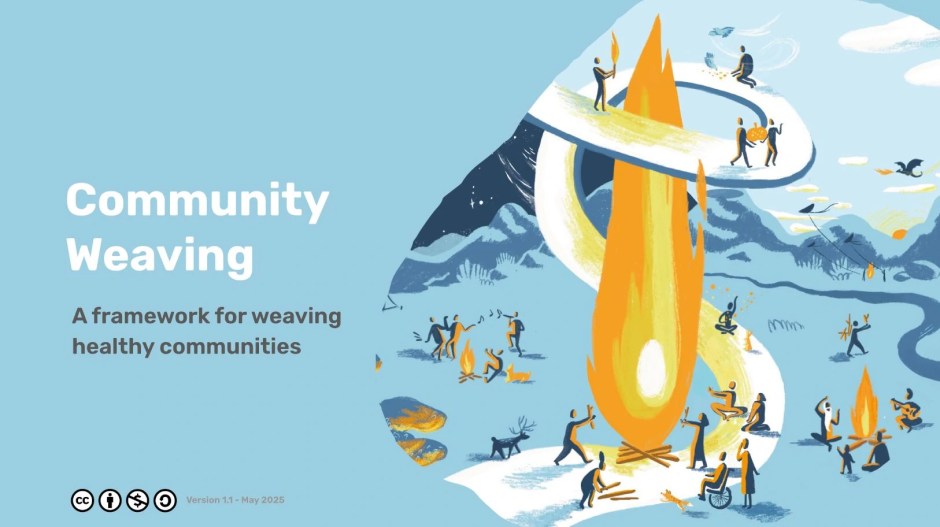
9. Community Weaving Framework
Erin Dixon, Fabian Pfortmüller, Michel Bachmann and Sita Magnuson
Five elements: the Fire (what brings us together), the Web (what holds us together), the Rhythm (the rituals that connect us), the Circles (the roles we can play), the Spiral (our journeys). Five years and 50+ interviews behind it. Creative Commons licensed, with a handbook, a one-page canvas and a Miro template, so you can adapt it for your own group without asking anyone.
10. The Anindilyakwa Peacemaker Program, Groote Eylandt
Anindilyakwa Land Council
Elders mediating disputes before they escalate. The principle is staying in the middle. Recorded crime almost halved over five years. Read this Paul Ramsay Foundation account rather than the headline versions circulating on LinkedIn: it gives the numbers, names the other factors that likely contributed, and is honest about the Healing Centre’s early staffing and safety problems.

11. Rekindling Democracy: A Professional’s Guide to Working in Citizen Space
Cormac Russell (Cascade Books, 2020)
His argument is that industrialised countries are suffering a democratic inversion: the doctor is assumed to be the primary producer of health, the teacher of education, the police officer of safety, the politician of democracy. Russel argues that the professional’s job is not delivering top-down services but precipitating active citizenship, and it starts after the important work of citizens is done. His warning is: institutions are not benign, and their gravitational pull draws them back time and again to doing things to people and for people, and only occasionally with them. Note he includes collective impact in that critique, by name.
12. Battle for the Franklin
Roger Green (ed.), Australian Conservation Foundation (1984)
Conservationists, politicians and dam workers in their own words, recorded straight after the campaign. Green calls it a first rough draft of history. Its closing argument cites that while the dam was stopped, the structures that produce dam proposals did not change, so the same battles recur. That is the Engagement with the system domain in one paragraph, and it is our own history.
13. Pay What It Takes
Paul Ramsay Foundation, Social Ventures Australia and the Centre for Social Impact
Indirect costs are about a third of what it actually costs to run a charity. Funding agreements typically allow ten to twenty percent. It forces organisations to under-report to stay fundable, and the gap comes out of the work. Liz Yeo: We need to stop praising charities for their ability to deliver impact on the smell of an oily rag. Read this one alongside the rubric’s Funding relationship domain, where stage three is honest conversations with funders beginning.
14. The Boring Fund Aotearoa
Dabble / Fundsorter, New Zealand
$500 grants for the unglamorous things: web hosting, accounting fees, admin time. Five-minute application, no reporting afterwards, and no scoring or ranking. Grants are allocated by random draw across all eligible applicants. It is small and it is in another country, but it is the only example in any of this reading where someone approached a structural problem by changing the mechanism rather than improving the paperwork.
15. Six Pillars: futures thinking for transforming
Sohail Inayatullah (Foresight, 2008)
Used futures is what happens when we uncritically adopt a future built for somewhere else, which is most of what arrives in a place-based project as a model. The disowned future is the idea that what we excel at becomes our downfall, because we are too busy being good at it to notice.
16. An instant review of Whole-System Development, Janoff (2026)
Benjamin P Taylor, Systems Community of Inquiry
Systems develop when enough of the system is brought into contact with itself, so real differences can be seen and held. The point is not agreement, it is the capacity to act together before agreement exists. Taylor’s three cautions are the sharp bit, particularly the third: without ongoing structures, a big whole-system gathering becomes a beautiful island.
17. Flourishing Kin: Indigenous Wisdom for Collective Well-Being
Yuria Celidwen (Sounds True, 2024)
Celidwen is of Nahua and Maya lineage and spent years at the UN on Indigenous and planetary rights. Her argument is that happiness is only possible in community, and that focusing on our own state of mind alone is precisely why so many of us struggle. It covers seven principles, including Kin Relationality and Ecological Belonging. The book is scholarly in places; the linked David Bollier interview is the gentler way in.
Top three reads
Jilya, for what agency looks like when nobody grants it. The Lowitja faux-design paper, for the vocabulary. And First Tasmanians, because it is this island’s deep history and because it shows that the question of whose story counts was being fought here long before settlers arrived.
Part Two: The Wider Map
Everything else from the big reading list, sorted by the seven rubric domains. Some items sit in more than one domain; they are listed where it feels like they fit best.
1. Self-understanding and agency
From waiting for permission to no longer experiencing yourself as someone who needs to ask.
Realist Social Theory: The Morphogenetic Approach, Margaret Archer (1995)
The rubric aligns with this theory (quite by accident). Structure conditions us, we act, and what we do either reproduces or transforms the conditions. The link is a free plain-language explainer; the book itself is heavy going.
Moral Ambition, Rutger Bregman (2025), and Zaid Hassan’s reply
Bregman argues talented people should quit pointless jobs and fix the world. Hassan’s reply: privileged professionals lack courage not awareness, and the biggest waste of talent is in jails, slums and refugee camps, not offices. Read the argument, not just one side.
Evidence from Australia and internationally shows us that cultural and creative engagement builds belonging, trust and connection, and combats loneliness and isolation. The useful finding: most policy aimed at social cohesion does not tap arts and culture at all, and most cultural policy does not explicitly pursue cohesion. It makes the case, to governments that the creative work this project does is cohesion infrastructure rather than decoration.
The Regenerative Leader, Lucy Richards
Inner work for outer action.
Governance in and for complexity, Ingrid Burkett (Good Shift / Yunus Centre Griffith)
A three-part series on collective governance in complex systems, and everyday patterns for shifting systems and moving beyond services. Burkett was the co-founder of the Yunus Centre at Griffith; her example of systems-shifting intermediaries is directly useful for thinking about what role a backbone like Burnie Works actually plays.
The follow-up to Hospicing Modernity. She names colonialism as neurocolonization: an oppressive function of modernity that rewires how we think, act, imagine and adapt, cutting us off from our natural ways of building community, choking our ability to cope with trauma and embrace complexity. Four capacities she argues we need: sobriety, maturity, discernment, responsibility. Her focus is strategic disinvestment, recognising what no longer serves and reinvesting elsewhere.
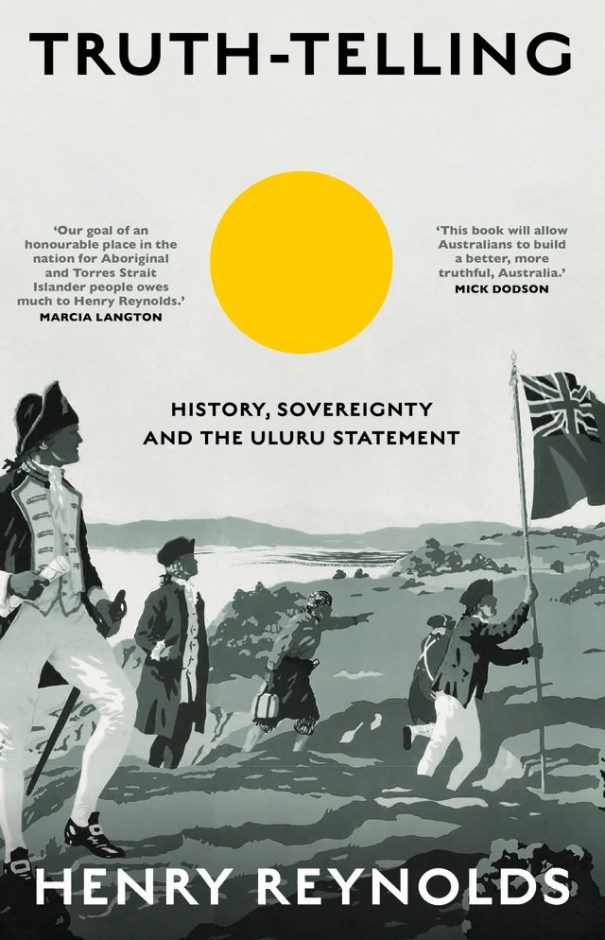
Truth-Telling: History, sovereignty and the Uluru Statement, Henry Reynolds (NewSouth, 2021)
Reynolds asks first-principles questions: what if the sovereignty of the First Nations was recognised by European international law at the time, and the colonial office understood that peaceful settlement was a fiction? His conclusion is that the Uluru Statement carries the weight of history and law.
The Way We Are: Lessons from a lifetime of listening, Hugh Mackay (Allen and Unwin, 2024)
Drawn from thousands of interviews across a sixty-year career in social research. Covers loneliness, anxiety, entrenched poverty, ubiquitous technology, and what he calls the fake wisdom that guides too much of our thinking. His question: what kind of society do we want to become?
Whitefella Culture, Susan Hargrave (Summer Institute of Linguistics, 1991)
Available through the National Library of Australia. The book which is aimed at Aboriginal people provides cross-cultural perspectives on manners and social norms, time and value systems and bureaucracy and systems.
Types of Allies, Tammy Baart, Blak Ignited
Five overlapping roles rather than a spectrum: Friendly Appreciator, Anxious Invalidator, Accomplice, Co-Resistor, Sponsor. Her framing is that allyship is a Venn diagram: fluid, contextual, ever-evolving, and the point is honest self-reflection rather than labelling or shaming.
Choosing Indigenous Resources with Confidence, Care and Cultural Integrity, Blak Ignited
Relevant to anyone using this reading list, since selecting Indigenous resources well is exactly what a reading list asks you to do. Her related paid resources include When Allyship Becomes Extractive and a Cultural Load Cheat Sheet.

2. Voice and story
From others speaking for community, to community holding the talking stick and no one speaking for them.
The Rot, Evelyn Araluen (UQP, 2025)
Won the $100,000 Victorian Prize for Literature and the Prize for Indigenous Writing in February 2026. Poetry, and it belongs here for the same reason Benevolence does.
Storytelling in place-based work, Dusseldorp Forum, Hands Up Mallee and the Centre for Public Impact
Their finding: stories can be used to change the system, not just to evaluate or showcase change. The most useful part is the list of eight things they set out to avoid, including a theoretical report that gathers dust and people feeling their input was not heard.
Reimagining Research, sahibzada mayed
Impact is often measured in extractive, dehumanising ways that prioritise institutional gain over community accountability. Their argument is that the hyper-focus on quotes, statistics and data devoid of context is a form of sensationalism that diverts attention from systemic injustice. The reframing question: what if impact was measured through relational responsibility? The framing: imagine research as a relationship rather than an extractive and controlling process.
Joy as data, Lakshmi Venkataraman, Academic from the Margins
Can joy be considered a form of data, one too often dismissed? Her argument is that joy coexists with pain and deserves engagement as an analytic, not as a distraction or a denial. Her Substack describes itself as a space for thinking from the edges, where the margins become a method.
Animated research, Ella Scheepers with Emma Dulski
A PhD translated into animated glimpses, told through tigers, octopuses, soil and spirals. What if the goal is not to crack the code, but to catch the rhythm? Scheepers’ finding: you cannot build a culture of care from the top down, it comes from day-to-day interactions rather than policies or mandates.
Mounty Yarns: Lived Experiences of Aboriginal young people in Mt Druitt (2023)
Led by Aboriginal young people of Mount Druitt through Just Reinvest NSW, with Daniel Daylight, Terleaha Williams and Isaiah Sines. Their words: We speak for those young people who aren’t usually given a voice or listened to. We share these yarns with you and ask that you listen and hear our truths. We hope that you hear our solutions and back us to make change. There is also a 24-minute documentary.
Generative Scribing: A Social Art of the 21st Century, Kelvy Bird (2018)
For anyone drawing the work rather than writing it. Bird co-founded the Presencing Institute and unpacks thirty years of practice. Scribing is drawing while people talk, so the picture unfolds in front of them; generative scribing extends that to the whole ecosystem and to what is trying to emerge. Five inner capacities: being, joining, perceiving, knowing, drawing.
On film: how these stories get told
A separate note, gathered by the team making the community documentaries. These are not here for their arguments but for their craft: how personal storytelling can carry a wider issue, how a camera can sit close and observational without becoming intrusive, how a film about one person can be about a whole system.
In My Blood It Runs (2019), directed by Maya Newell
The reference the others are measured against. Ten-year-old Dujuan Hoosan, an Arrernte and Garrwa boy in Mparntwe (Alice Springs), a healer and hunter who speaks three languages, is failing in a school system built on someone else’s values and drifting toward detention. Newell filmed over three and a half years, in deep collaboration with Arrernte and Garrwa families and with Larissa Behrendt among the producers. Dujuan later became the youngest person to address the UN Human Rights Council. This is the model for a personal story speaking to a structural issue.
Watchers of the Land, National Geographic
The Ni Hat’ni Dene Guardians of Lutsel K’e Dene First Nation taking youth and Elders across the water to monitor and protect Country, as a new national park reserve, founded and co-governed by the community, comes into being. A reference for observational documenting of a community consultation and stewardship process.
Mounty Yarns, Just Reinvest NSW
Already a pick above in this domain, listed again here for its filmcraft: storytelling structured in three acts (backstory; problems and challenges; community-identified solutions and their impact), with additional footage layered under the conversation. A Brighton reference point for the community documentaries.
In a train carriage going nowhere (podcast)
Included among the fuel-for-the-journey references. A listening companion rather than a film.
3. Relationships and connection
From isolation, egos and logos, to a movement rather than a network of providers.
Three Circles of Engagement, Michel Bachmann
Stewards, Co-Creators, Friends. The key claim: engagement is not static, it flows, and people move between circles as life and capacity change.
Warm Data Labs, Nora Bateson and the International Bateson Institute
A group process for thinking about complex problems without stripping out the relationships that define them. People explore an issue from many contexts at once, which surfaces understanding that analysis into parts destroys.
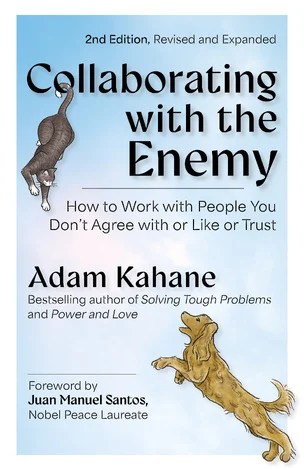
Collaborating with the Enemy, Adam Kahane (2017, 2nd ed. 2025)
Stretch collaboration: moving forward together when trust is low, agreement is absent and control is limited. The conventional model, a harmonious team agreeing on everything, is the wrong model.
Transforming Practices, Collective Change Lab
Their newer work: building trusted relationships, enacting collectivist values, system storytelling, collective healing. Directly relevant to closing well, because it covers snap back, the return to old patterns, and argues those moments can strengthen trust if repair happens quickly.
The Scottish Community Learning Exchange, via Kate Williams
Small grants for community groups to visit and learn from peers already doing the work. The premise: to build agency, one of the most effective things is seeing people like yourself actually doing it.
How-To-Guide for Linkers, Navigators and Connectors, Lisa McGhee and Lee Bratel (2024)
Final output of a two-year Navigator Network pilot across 15 organisations, facilitated by TACSI. Roles, Capabilities, Activation, Future.
Leadership as community development, Ben Pangas
Smith’s idea, a community’s emotional infrastructure, belonging and civic muscle, is as vital as its physical infrastructure. Draws on the Knight Foundation’s Soul of a Community study: three years, 26 cities, 43,000 interviews, finding attachment was the strongest driver of local economic vitality.

4. Engagement with the system
From blaming or avoiding the system, to shaping it and breaking rules constructively and openly.
The MUM Effect, Sidney Rosen and Abraham Tesser (1970), via Joss Colchester
The reluctance to communicate unfavourable news. Coined by Rosen and Tesser in Sociometry in 1970, not by Tavris and Aronson as the widely circulated version claims, though their Mistakes Were Made (But Not by Me) is a related and worthwhile read. Drivers: social desirability, self-protection, and empathy. Consequences: false security, perpetuated misinformation, hindered organisational learning. This names the mechanism behind almost every sanitised report any of us has read.
Problem framing, Joss Colchester, Systems Innovation
Telling stories that focus on problems narrows vision to a problem-solution frame, and solutions come as parts, easily packaged and co-opted by business as usual. Quoting Russell Ackoff: In reactive problem solving we walk into the future facing the past.
Social licence panel, Gippsland New Energy Conference (2024), via Fiona Davis
The most locally relevant item in the whole set, given Marinus. Takeaways: work with the rhythms and seasons of a community; engagement needs to be relational not extractive; licence is a spectrum and particular groups should have their own; you often don’t know you have social licence until you’ve lost it; numbers are not a good indicator of support; the question people actually ask, and the one we forget, is does it fit with my values?; and we should be talking about cultural licence, not social licence.
Lee is a trawlwulwuy woman from tebrakunna country in north-east Tasmania, at Federation University’s National Centre for Reconciliation, Truth and Justice, and has worked from an office in Burnie. Key architect of Reset the Relationship, the Tasmanian government strategy.
Ruth Forrest on Marinus and the Hydro explainer series
Eighteen chapters, now complete, plus 42 articles on energy. Whatever your view of the project, this is what constructive truth-telling about a system looks like from inside the parliament.
Franklin Dam and the Greens, National Museum of Australia
Short, free and reliable. The United Tasmania Group, formed in 1972 around Lake Pedder, was the world’s first green party. Pedder was lost in 1976 and the Wilderness Society formed that year in response.
McLean is principal of The Partnership, and writes explicitly for people holding the space for change and for government teams working in complex policy areas. Her reframe of the standard corporate move rather than aligning staff behind purpose and values, asks how your personal purpose connects with this organisation’s purpose, and where your values intersect with ours.
Combining, Nora Bateson (Triarchy Press, 2023)
Bateson coined warm data: information about the relationships between things, which is lost the moment you separate them out to measure them. Combining invites us into an ecology of communication where nothing stands alone and every action sets off a chain of incalculable consequences. She is suspicious of overly mechanical systems language, and the book enacts its own argument, moving between essay, poetry, image and story rather than explaining from a distance. Familiar is not the only way.
Ideas that should have been thrown out, Tabitha Lean
Every society has ideas that should have been thrown out years ago. Instead, we polish them up, give them nicer names, and call them common sense. It’s bin day. Lean is a Gunditjmara woman, born and raised on Kaurna yerta, a storyteller, poet and abolition activist writing from lived experience of prison and home detention.
5. Power and decision-making
From beneficiaries absent from decision tables, to subsidiarity as the default rather than the exception.
Logan Together Shared Decision-Making Wheel
Documented after ten years of practice. Spans child, family, community, services, and policy/environment/investment, with four questions at each: who needs to be involved, what evidence is needed, what does good decision-making look like, what steps move us to action? Contact Logan Together directly for the file.
Raven Forgot: Indigenous Planning Cannot Be Copied, Qwuy’um’aat (Eyvette) Elliott
Elliott is a Qwuw’ustun (Cowichan Tribes) woman on Vancouver Island, owner of Ever Plan Consulting, formerly Senior Strategic Advisor at BC Housing, and an instructor in Vancouver Island University’s Master of Community Planning and Indigenous Land Management program. She works from nuts’a maat shqwaluwun: one heart, one mind, one spirit.
The cedar framework, Jalissa S., Cedar Bridges Consulting
There is no re-using a decolonial or Indigenous framework. They must be co-created from the ground up in a process that acknowledges contexts, relationships, values and intentions, so what is shared is intentions, not a pre-built framework. Her words: a guide of intentions and impact. The pathways that get us there will be found in collaborative partnership.
Indigenous Knowledge Systems Lab cultural protocols, Deakin and Algoma
Open-source protocols for engaging with the regulatory mechanisms of Indigenous Peoples when working with traditional knowledge. Explicitly intended to be adapted locally.
Ngaramanala: Aboriginal Knowledge Program, NSW Department of Communities and Justice
Begun in 2019, a collaboration between Transforming Aboriginal Outcomes and FACSIAR, with an internal Aboriginal-led Data Governance group. Its purpose is preparing a government department to enable, embed and respond to Indigenous Data Sovereignty and Governance as defined by Aboriginal people and communities, not by the department.
NSW Data Connector Service, via Amy Opio
Part of the joint program between the NSW Government and the NSW Coalition of Aboriginal Peaks Organisations, delivering Closing the Gap Priority Reform 4 on shared access to data. The model aims to understand the layers between a public servant and the people they are responsible to, then apply a when they don’t rule, the space where those layers should not be used, which is where innovation and real relationships become possible.
Indigenous Governance Awards 2024, Reconciliation Australia
Melythina Tiakana Warrana Aboriginal Corporation (MTWAC) is the Tasmanian winner. Also Learning on Country (NT) and Djarindjin Aboriginal Corporation (WA).
6. Funding relationship
From dependency and happy to take the crumbs, to guidance flowing from community to funder.
Bringing relational contracting to life, Social Ventures Australia
What relational contracting looks like when taken from concept to delivery, drawn from SVA’s experience with the Resolve Social Benefit Bond. Written for commissioners, which makes it useful to hand to a funder: the practical companion to Pay What It Takes, moving from the principle that indirect costs should be covered to the mechanics of a contract built on relationships rather than compliance.
Eight challenges standing between good intentions and better funding, across four layers: mindset, structural, operational, field-level. Her closing move is the one that lands: these eight challenges are the same ones preventing the systems we care about from changing.
Pando Funding, Rob Ricigliano and Anna Muoio
Their critique of the dominant model: the incomplete idea that funding a range of individual projects will somehow add up to system-level change.
Pay-What-It-Takes Philanthropy, Bridgespan
The evidence base under the Australian campaign. Across 20 high-performing nonprofits, indirect costs ran from 21 to 89 percent of direct costs, median 40 percent, against the 15 percent most foundations provide.
Closing the carbon credit arm, Philippe Birker, Climate Farmers
After four years they shut it down. We entered the carbon market with the hope of honouring the full complexity of regenerative agriculture. But we quickly ran into the limitations of carbon markets that seek simplicity, while we work with complex, living systems. They lost team members over it and published the learnings anyway.
The Place Partnership Model, DSS (June 2026)
Almost $40 million across 18 communities, including Burnie. The model is largely about guiding where existing funding goes, not new program money. This is the live test of everything else in this domain.
PLACE (Partnerships for Local Action and Community Empowerment)
Government and philanthropy, $19.31m each over five years. The challenge is shifting practice so that partnership with communities through shared decision-making is baked in as the new normal.
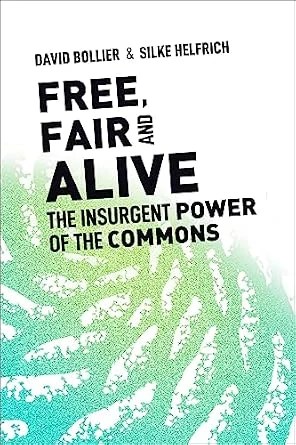
The commons as a live system of provisioning and governance, beyond the dead-end binary of capitalism versus socialism. Twenty years of learning from commons around the world, written for an activist audience rather than an academic one. The book can be read online for free or purchased as a hard copy.
FRRR and four Victorian foundations, $5m over five years
Notable for selecting communities partly through an exploration of community readiness for the investment. That readiness framing is now everywhere.

7. Structures, rules and resources
From compliance burden suppressing participation, to structures that serve community pace and hold space for the long game.
Renaisi place-based and systems change evaluation model
Five stages across a ten-year timeline: Foundations, Place-Based Systems Working, Changes to Places, Changes in Systems, Population Change. Built on work across 70 places. It acknowledges population change takes five to nine years, which is the argument for measuring the things that build towards it.
Stronger Places, Stronger People Model (2019), DSS with Clear Horizon
The founding design document for the initiative Burnie has been part of since 2019. The phases are neither mutually exclusive nor linear, and communities may move forward and backward.
SPSP sites and how they differ, NIAA stocktake
The clearest picture of how differently the ten sites are actually constituted. Bourke works through Maranguka and the Bourke Tribal Council; Far West through the Far West Aboriginal Community Leadership Group; Gove through Rirratjingu and Gumatj Traditional Owners. Authorising structure, not stated mission, is the real difference.
Place and Experience: A Philosophical Topography, Jeff Malpas (2nd ed. 2018)
The philosophical grounding of the word this whole project rests on. Malpas argues that human being is inextricably bound to place, that place is not a backdrop to experience but a condition of it, encompassing self and other, space and time, subjectivity and objectivity, and reducible to none of them.
One Space, Many Places: the Some of Place framework, Matt Healey
A complexity-informed framework for place-based evaluation.
Place-Based: A Neighbourhood Centre Approach, Neighbourhood Centres Queensland
As more funding becomes available for place-based work, many organisations state their work is place-based and definitions multiply. Neighbourhood Centres argue they have been place-based since inception.
Companion to Tasmanian History: Education
Tasmania was the first Australian colony to make school compulsory (1868) and the last to make it free (1908). Matriculation colleges were a Tasmanian innovation. Useful background.
Beyond Impact and Scale: Affection as Living Transformation, Graciela Selaimen
Selaimen’s question: what if what we now call impact is, in many cases, a way of silencing life’s complexity? Drawing on Spinoza, Deleuze and Nora Bateson, she argues for a shift from impact to affection, from separation to implication, from control to presence, and invokes Bateson’s idea of warm data. Her line: If we can fully measure the outcome of a social investment, it’s likely it hasn’t been transformative enough.
Part Three: The Toolkit
Things you can pick up and use, not just read. All free.
Community Weaving Canvas, handbook and Miro template
Creative Commons BY-NC-SA 4.0. Captures a community on a single page.
Open source, designed to be adapted to local bio-cultural contexts.
Renaisi five-stage evaluation model
Free to read and use. If you need to explain to a funder why population change has not shown up yet, this is the picture.
The short version of the model. Free. Includes Causal Layered Analysis, which is a practical way to get a group from the headline down to the myth underneath.
Choosing Indigenous Resources with Confidence, Care and Cultural Integrity, Blak Ignited
Free download. Worth reading before you act on anything in Part Two, particularly if you are selecting resources for a school, a group or a program.
Warm Data Lab hosting, International Bateson Institute
A facilitation method you can be trained to host: bringing a group into dialogue about a complex issue through many contexts at once.
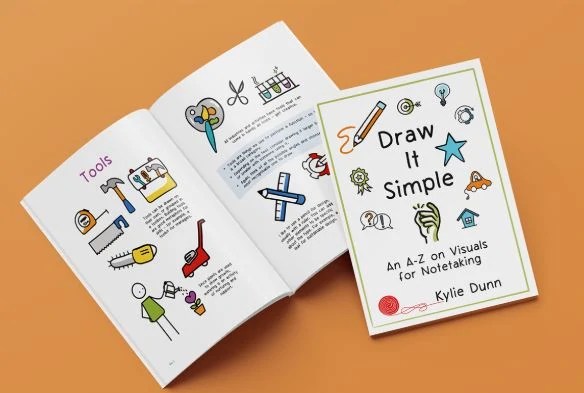
A visual-thinking and simple-drawing approach for making ideas legible, noted among the facilitation references.
The Place Project Change Rubric
Ours. The seven domains this guide is organised around plot movement, not scores. Expect uneven profiles. Pair every placement with an observed signal.
Good Follows and Watches
For the spaces between the reading.
Worth following
Nora Bateson, on warm data and why measuring relationships destroys them. Marcia Langton, on almost everything. Yin Paradies, whose sensing seed is pick two. Bill Sharpe, who built Three Horizons. Dave Snowden, on complexity and anthro-complexity, tough and not always comfortable. The Copenhagen Institute for Futures Studies, for the long view. Josie McLean writes More Than Human Centred on Substack.
One honest note. Following people is not reading them, and a feed is not a practice. This list is here because these are the people whose thinking turns up repeatedly behind the items above.
Worth watching
Jacinda Ardern, interview with Sarah Ferguson, ABC, on leadership
FREE. Prime Minister of New Zealand 2017 to 2023.
Mark Carney, speech to the World Economic Forum, Davos (2026)
FREE. Prime Minister of Canada.
And one look
An anonymous artist who works without permission, exhibited without permission, in a show about an artist who objects to it. Whose story is being told, and who authorised it, turns out to be the question here too.
What the Reading Adds Up To
Three things turned up so often, from people who had never met each other, that they are worth naming as findings rather than leaving as a list.
Frameworks cannot be copied
Four people say this independently, from four different places. The Lowitja Institute calls the copied version faux-design. Jalissa S. says a decolonial framework must be co-created from the ground up, so what you share is intentions, not a template. Qwuy’um’aat (Eyvette) Elliott, learning hul’q’umi’num’ in British Columbia, sees the trickster as a professional looking for templates. Fraser Murray, sitting in a humanitarian workshop in Geneva, watches disruptive language about decolonisation and shifting power get twisted into tools that support the continuation of Western control.
None of them cites the others. Four continents-worth of separate practice arriving at the same place is not a fashion.
The repackaging problem has a vocabulary now
Faux-design (Lowitja). The gold rush on Indigenous Knowledge (Tyson Yunkaporta). Noisy and congested at the expense of Community led innovations (Amy Opio, from inside government). Evidence-based research as a hierarchy of legitimacy that renders everything else dismissible (Fraser Murray). Ideas polished up and given nicer names (Tabitha Lean).
Five sources, four years, one phenomenon. If you have ever sat in a session where a familiar thing arrived wearing a new word and felt unable to say so, the language exists now and it is citable.
Changing the mechanism is rare, but it is not unheard of
Across everything gathered here, hundreds of articles, frameworks, models and posts, most of the best material improves how a process is applied. A handful of things go further and change the mechanism itself.
The Boring Fund removed competitive allocation by drawing lots. Climate Farmers shut down their carbon credit arm rather than optimise it, and lost staff doing so. Ngaramanala built internal Aboriginal-led data governance inside a government department rather than consulting about it. The Community Weaving Framework, the IKS Lab protocols and Free, Fair and Alive are all released under open licences, so nobody has to ask permission to adapt them.
That is five or six items out of many hundreds. The ratio is worth noting, and so is what the six have in common: each one cost its originator something. Control, revenue, staff, or the ability to say who uses the work. That may be the actual price of the difference between a better process and a different mechanism.
A closing question
Benjamin Taylor’s caution is the one to leave you with. A whole-system gathering creates a temporary container. Without ongoing structures for learning and action, it becomes a beautiful island.
The rubric says the middle stages cannot be engineered. Trust does its slow work or it does not. But the thing that carries trust past the end of a project is structure, and structure is a choice someone makes. That is the question in front of us, and no reading list answers it.
Explore Further
- Campaigns that Changed Tasmania
- Community-led Design Wiki
- Power and Connection – Exploring how Organisations Engage with Communities
- Orienting Around Shared Purpose in Diverse Communities
- Beyond Extractivism in Research with Communities and Movements
- Systems Thinking for Campaigning and Organizing
- Foresight and Futures Thinking for Social Change: Tools & Templates