
Introduction
A collection of resources which include suggested progressive framing and messaging of the Coronavirus/Covid-19 global pandemic and its various impacts. This page will be updated as new resources become available. Resources are categorised by country of origin but many of the messages are applicable in different national contexts. Click on each heading to either download the guide or visit another website.
We are waves of the same sea, leaves of the same tree, flowers of the same garden – Seneca. This quote was printed on boxes of masks sent from China to Italy to help stop the spread of coronavirus.
Aotearoa New Zealand
How to Talk About COVID-19: Narratives to Support Good Decision-Making and Collective Action
The Workshop – Aotearoa New Zealand, 26 March 2020
This short guide is to help you build your narratives about COVID-19 in ways that will encourage people to:
- Respond collectively, putting caring for each other first.
- Understand more deeply the role that public institutions and collectives play in ensuring our shared wellbeing.
- Engage in good decision making based on a respect for best knowledge and science.
- Create better systems that centre caring for people and the planet to cope with crises.
Contents:
- Introduction
- Communicating on behalf of an institution
- How to use this guide
- The challenge we face: thinking we don’t want to surface in a pandemic
- Five building blocks for surfacing deeper thinking & helpful action
- Building block one: Audience. Find those who need to hear your communications most
- Building block two: Vision. Develop a clear positive vision for during and after the pandemic
- Myth-busting or Pre-bunking?
- Building block three: Values. Lead communications with what matters most
- Using values in decision making during a pandemic
- Building block four: Better explanations
- Frames
- Framing to deal with power grabs during a crisis
- Metaphors
- Explanatory chains
- Using Facts
- Building block five: Storytellers. Find influential and trustworthy messengers for your message
- A checklist for your communications
- Further reading
Australia
Communicating Covid Vaccination
Common Cause Australia – Australia, Oct 2021
Two short videos and a messaging guide of evidence-based tips to help motivate people to get vaccinated.
Video 1 – Everything you need to know about our messaging and conversation tips, in 15 minutes.
Video 2 – Dive into more detail on our approach, and get inspired by great examples of COVID vaccination messaging (5:30 minutes).
COVID-19 Messaging Guide
Australian Progress – Australia 7 May 2020
The boundaries of what is politically possible have shifted rapidly in recent months. Now more than ever, we need to move past advocacy which merely prevents the worst from happening, to a transformational story that can fundamentally change society.
This initiative of Australian Progress builds upon previous and in progress narrative projects on climate change, the economy, race, class, First Nations self-determination and justice and people seeking asylum as well as recommendations from partner communications specialists including Anat Shenker-Osorio, Lilian Spencer (Australia reMADE) and the team at Common Cause Australia.
As we respond to COVID-19, we need messages that encourage people to:
- Understand the role that governments can play in ensuring a better life for all
- Be ambitious in imagining a better world, rather than seeking to return to a flawed ‘normal’
- Demand better policies that centre caring for people and the planet
- Respond collectively, putting caring for one another first
- Reject politics of division – racism, nationalism, xenophobia, sexism, homophobia etc.
Primer to Australian civil society leadership in a time of COVID-19
reMakers’ Memo 20, Australia reMade – Australia 14 March 2020
The Prime Minister’s frame is that Australia is well placed to deal with coronavirus because we have a strong economy. We argue that Australia is well placed to deal with coronavirus because of strong communities, public trust and public institutions. – Australia reMade
The memo outlines these steps to making Australia stronger through this crisis:
- Step 1: Talk about the public good and public institutions (Medicare, the ABC, public hospitals, healthcare workers, paid leave). Building up the narrative of the public good will help us better respond to both crises and the roots of crises.
- Step 2: Watch out for politics of distraction and shock doctrine tactics (eg: pushing through tax cuts, deregulation, privatisation) – as this crisis may be used to distract from other important issues.
- Step 3: Build community and strengthen our collective power to ensure this makes our country stronger, reconnects us to our democratic values in a time of emergency, and supports citizens to ‘be our best selves.’
Step 1 includes a number of messaging suggestions.
How can I / my organisation respond to COVID-19?
Crowdsourced and evolving guide – Australia, 16 March 2020
This guide was created by people campaigning on issues related to the COVID-19 response. It’s intended for organisers and campaigners looking for ways to lead an anti-racist and intersectional response.
The document is split into 3 sections:
- Outline of main campaign areas and the organisations working on them
- Messaging guide
- Further in depth explanations of what’s wrong with aspects of the response
Ireland
How to Talk About COVID-19
Uplift: People Powered Change – Ireland, 20 March 2020
A helpful messaging guide with advice on talking about COVID-19 using values-based words, metaphors, and frames. It includes sample language illustratiing ways to frame things in terms of solidarity, community, the public, and long-term solutions rather than in neoliberal, conservative, and reactionary frames.
United Kingdom
In unimaginable times
Public Interest Research Centre – UK, 20 March 2020
We know that in moments of change new worlds come into being. The way this crisis is being talked about today will shape the world we emerge into. To begin to help us understand, and intervene, in the COVID-19 narrative we mapped the key beliefs that are shaping our understanding of this moment. We hope this resource will help progressive communicators develop messaging strategies, or serve as a checklist to evaluate ideas against. – Public Interest Research Centre
This evolving resource includes:
- Messages of hope
- Beliefs for change
- Resources for action
United States of America
National COVID-19 Messaging Document
Anat Shenker-Osorio, ASO Communications – US, 16 March 2020
Decades of testing demonstrate that fear evokes a fight or freeze response, with the latter the far more common response. In order to inspire people to demand more and better, we must thread an increasingly fine needle between articulating the severity of this moment and providing hope that we do indeed have solutions and, by coming together, can demand they be put into place…
The antidote to fear is love and connection, even where these cannot be realized in physical presence. Our message should be rooted in the values of interdependence, mutual solidarity, shared purpose and collective action. Because when we are all in for all of us, we can create the world each and every one of us needs to thrive. – Anat Shenker-Osorio
This messaging guide includes:
- Key Narrative – to be used in broken out component parts or in entirety, depending on context and medium
- Talking Points – Use in combination, mix and match depending on medium and length desired:
-
- We get through this together. (response to individualism)
- This is a time to come together across the differences used to divide us. (response to racism, othering, dog-whistles)
- Protecting our most vulnerable makes us stronger. (response to inequality)
- When we invest in local government, we invest in us. (response to role of government)
- Time to take care of all of us – not just corporations. (response to protecting people and not relying on market “solutions”)
Framing a Community Response to COVID 19
Collaborative working document – US, 17 March 2020
This document includes top line messages, goals, needs from decision-makers, values and metaphors.
Values we want to activate when we speak to people about COVID 19:
- Universalism.
- Cooperation.
- Community.
- Care.
- Respect for Expertise. (Not necessarily authority)
- “We will get through this together”.
Values we want to deactivate when we speak to people about COVID 19:
- Self interest.
- Security.
- Belief in ‘Market’ and the ‘Economy’ as a priority.
- Racism, Xenophobia.
- Scarcity mentality.
- Tradition/conformity.
- Purity/disgust.
- Competition, Social Darwinism/Survival of the fittest.
Talking About COVID-19: A Call for Racial, Economic, and Health Equity
The Opportunity Agenda – US, 9 March 2020
Insights document with a number of links to related initiatives and resources.
What perhaps makes the COVID-19 pandemic unique is that we are literally all in this together – across boundaries illusory and recognized, across nations, oceans, and the globe. Therefore, we have a unique opportunity at hand. While the economic and racial disparities in how this epidemic could be handled are clear, now is the time to call for greater and more equal health justice. Now is the time to join communities of color in their demands for racial equity. Now is the time to protest the scapegoating of immigrants. We must push back against the language of fear and adopt language of inclusion, empowerment, and justice. Together, we can rise to the challenge. – The Opportunity Agenda
Talking About Coronavirus: Centering Language around Inclusion, Empowerment, and Justice
The Opportunity Agenda – US, 9 March 2020
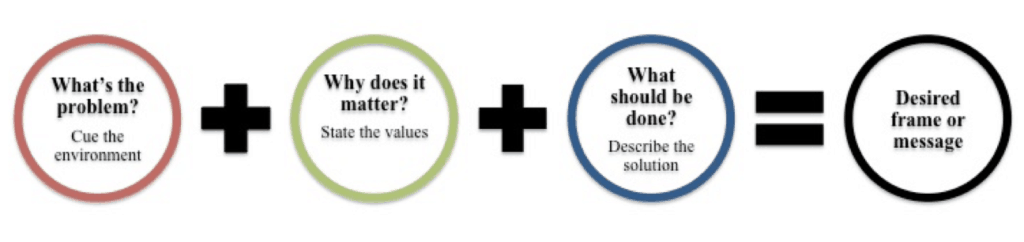
This guide proposes a VPSA (Value, Problem, Solution, Action) format when talking about the coronavirus and its response, and centering your language around inclusion, empowerment, and justice.
Talking about health, housing, and COVID-19: Keeping equity at the forefront
Berkeley Media Studies Group – US, 25 March 2020
At this moment, we must highlight the urgent need to ensure everyone has safe shelter during the COVID-19 pandemic and emphasize that homes are a crucial foundation for a healthy society. – Berkeley Media Studies Group
How Progressives Should Talk About COVID-19
Anthony Torres – US, 15 March 2020
Article with suggested messaging to:
- Adequately prepare the public for action, minimizes panic and deliver a measured, scientifically-informed approach.
- Alert people to the coming right wing, authoritarian crackdown, expose to the public and inoculate them from easily bending to their campaign of disinformation and power grabs.
- Leverage this moment to advance progressive policies that bolster our communities, that help us care and relate to each other and keep us safe in positive ways nationally and globally. By leaning into our interdependence, we can use this moment of capitalist slowdown to model the world we should be living in instead.
Framing COVID-19
Frameworks Institute – US, March-May 2020
In this uniquely challenging moment, we need to connect people to the bigger picture. We need ways to explain health, enhance community, and offer hope.
The Frameworks Institute is pulling guidance from twenty years of framing research and practice to help advocates and experts be heard and understood in a time of global crisis. Every few days, we’ll share a few ideas that can help us all amplify the values of justice, inclusion, and interdependence and post them here.
Sign up for this special email series here. View past emails (eg Topic #1: Deploying a common good frame; Topic #12: How to foster solidarity while others fuel division; and more) here.
#MapTheTruth: A COVID-19 Social Justice Guide
We listen because we care. We learn to unlearn. The best way to dispel misconceptions and lies is to uplift the truth with care.
A PDF Guide and social media shareables. The guide includes:
- In Chaos and Crisis We Can Find Solutions and Hope
- Taking Action, Finding Solutions and Living Our Values — Together
- Making Comparisons
- Imagery Guidance
- Additional Resources
Other resources
Please contact the Commons Librarians if you have a resource to contribute. See also Narrating Change During Psychic Breaks. For more communications guides see How to Frame Issues for Social Change Impact.
See the other Coronavirus/COVID-19 related posts on the Commons.