
Introduction
Across many movements there is a deep exhaustion that comes from seeing the world aflame.
Hard‑won gains for peace, rights, and justice are being rolled back and, in some places, quite literally reduced to rubble by a sharp rise in wars and armed attacks carried out both by regimes with long histories of repression and by governments that once claimed to champion democracy and human rights. For many organisers, this creates a profound emotional weight: the arduous sense of pushing forward for justice while witnessing the ground beneath past victories being pulled away.
Organisers feel trapped between urgency and overwhelm. No wonder. We are called to respond to climate collapse, authoritarianism, inequality, and violence — often with little structural traction and enormous emotional cost. We are exhausted.
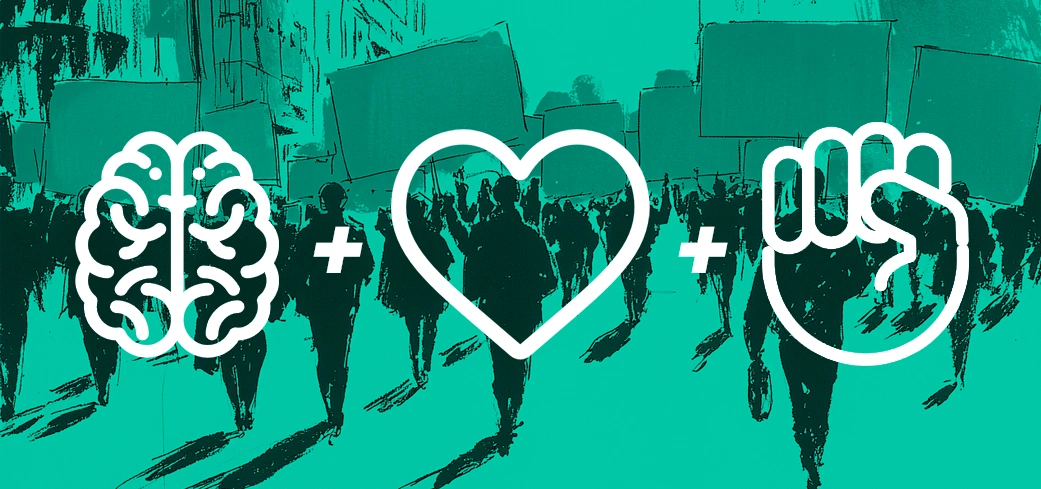
Mind Over Matter
There is a growing recognition of ‘activist burnout’ as a major threat to the sustainability of social movement organising. And research confirms what activists already know: long-term engagement in social justice work can take a heavy emotional and physical toll.
Many movements have become highly strategic and tactically sharp — but less equipped to sustain people, hold grief, navigate conflict and prevent dehumanisation. When crises multiply and the stakes feel existential, it becomes difficult to slow down, reflect, or recover.
Sustaining movements is not only a strategic question. It is also a human one.
- How do we continue working for change without burning out?
- How do we confront injustice without becoming trapped in anger or despair?
- And how can movements build strength without sacrificing the wellbeing of the people within them?
Sustaining the Struggle
Around the world, many activists are exploring new ways of answering these questions, often drawing on insight from older traditions of collective care. Some are rediscovering the spiritual dimensions that shaped earlier movements, such as those led by Gandhi or Martin Luther King Jr. Others draw on Black feminist traditions that highlight joy, pleasure, and collective care as political resources. Indigenous perspectives emphasise relationships with community and the Earth, while practices like mindfulness, trauma-informed organising, and community healing spaces are becoming more common in activist circles.
These approaches share a simple but powerful insight: care is not a distraction from political struggle — it is part of what makes struggle sustainable.
For movements facing long-term crises, the question is no longer only how to mobilise people. It is also how to sustain them.
And that may require moving beyond individual self-care toward something deeper: cultures of community care that allow activists to remain courageous, connected, and engaged for the long haul.
Caring for myself is not self-indulgence, it is self-preservation, and that is an act of political warfare. – Audre Lorde
Watch Video
This masterclass includes Crystal, a social psychologist, researcher, and systemic psychotherapist specializing in trauma healing, community empowerment, and emotional well-being.
With global conflicts escalating, the state of democracy in peril, and the backlash against civil society exposed across continents, we explore cultures of community care that enable activists to remain courageous, connected, and engaged for the long haul.
Resources
Burn Brightly but Don’t Burn Out, Beautiful Trouble
Taking care of ourselves and having fun in our work for social change are essential to building stronger, more effective healthier movements.
Burn brightly, but don’t burn out with movement psychologist Cristel, Trouble Makers Podcast, Beautiful Trouble – Episode 20
Pain is often treated as something to suppress, avoid, or silence. But what if true healing comes from embracing it fully—together? We sit down with Nicaraguan movement psychologist Cristel Montenegro to explore the power of collective trauma processing. We examine how communities facing deep wounds caused by violence and systemic oppression can embrace healing through storytelling and welcoming emotion.
Mental Health Strategies For Young Women In The Digital Age, Global Platforms
This workbook and guide is intended for activists, new and seasoned, who are looking to make collective spaces to come together and take that collective sigh together. (PDF)
Humor: A Subtle Rebellion against Despair, a Soft Defiance of Hopelessness, ICNC
Explore the importance of using humour to build resilience and identify our wounds.
Karibu Residence: a sanctuary of well-being for activists in distress in the heart of Téranga
Learn about the Karibu Residence in Senegal, a place of refuge and respite for activists in distress.
Resources for Trainers and Learners
Healing and Building Resilience, Global Platforms
This module explores the importance of mental and physical well-being at the time where energy is low and outright victory seems out of sight.
Building Resilience and Care for the Long Haul, Beautiful Trouble
This module provides facilitators and organizers with accessible self-care and community care practices that support building effective, sustained movements for social change.
Musical Resilience
Zara Mcfarlane – Peace Begins Within [2017]
Clinton Fearon – Waiting [2016]
Winston McAnuff & Fixi – Garden of Love [2013]
Alice Clark – Looking at Life [1972]
Jazzmeia Horn – People Make the World Go Round [2017]
Explore Further
- Building resilient groups
- Building resilience: Self-care and community care for the long haul
- Staying resilient while trying to save the world
- Impacts of activism on health and wellbeing
- Embodied practice: community care and co-regulation
- Movement Memo – Developing Strategic Capacity and Cultivating Collective Care: Towards Community Power
- Building cultures of care, Climate Justice Organizing Hub Wiki
- Right-Sized Belonging: Six Practices For Organizers
- Burnout isn’t a personal problem, it’s an organizational problem, PowerLabs