Introduction
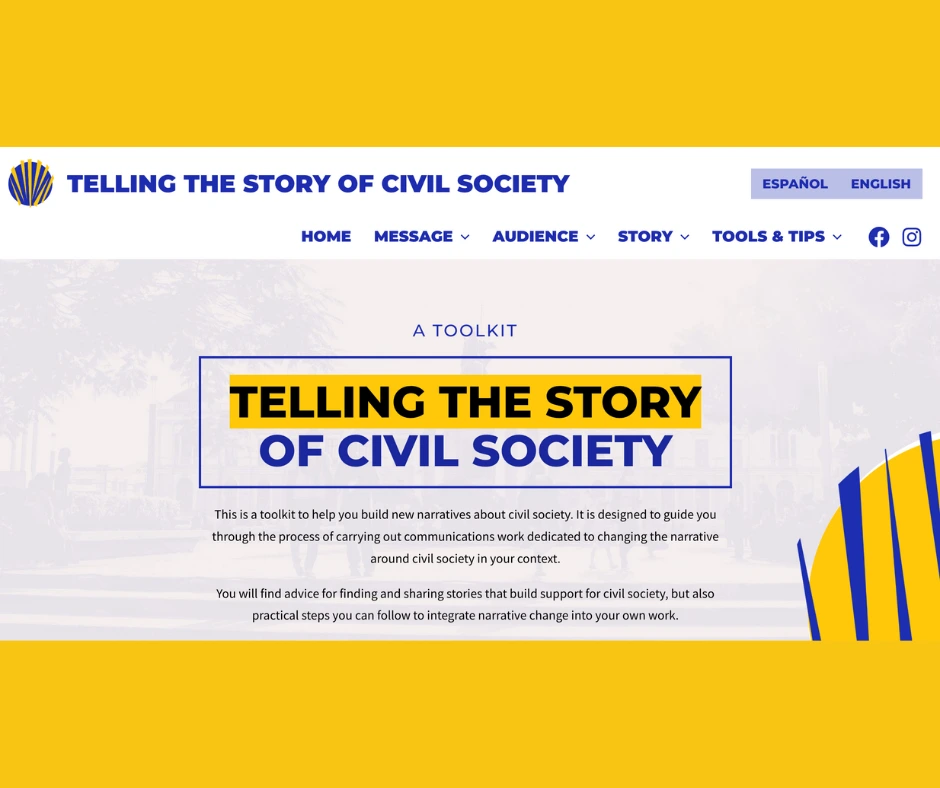
Around the world, civil society is under pressure—from misinformation, public distrust, and shrinking civic space. To push back, we need more than facts—we need powerful narratives that inspire connection, hope, and action. This online toolkit by Metgroup brings a hope-based approach to talking about civil society.
Whether you’re a communicator, organiser, or advocate, it offers a practical path to creating compelling narratives that show why civil society matters—and how it can thrive.
The toolkit follows a straightforward three-step Message–Audience–Story framework to help you design and run your own narrative communications strategy. Each section includes worksheets, tips and instructions to help you and is available in English and Spanish.
Narratives and Civil Society
What do you want people to know about Civil Society?
If we want people to stand up for civic space, then we need to tell a compelling story about civil society: what it is, how it works, why it matters.
People understand the world through stories. Even facts tell stories. What is the story we want people to understand about civil society?
It needs to be a hopeful story that motivates them to get involved in civic life, to engage and participate in the decisions that affect them. It needs to make them care enough about each other to passionately defend civic space and human rights when they are threatened—as is happening in many countries around the world.
How Narratives can grow Civic Space
Narratives matter for civil society because what people believe influences how they behave. We need people to believe that civil society matters to them enough to act, to join it and defend it when attacked.
Narratives are the set of stories we tell ourselves about how the world works. They are ways we understand complex things that are happening in society and impact us.
If people come to think a certain way about, for example, what it means to be a civil society activist, it can be very hard to change their minds, even if we present them with compelling evidence, with facts.
Strategic Approach
Narratives are made by constantly repeating words, images and storytelling. If we do not tell our story, it can never become a narrative.
Normal communications raises awareness, strategic communications changes attitudes and behavior. We do so by identifying goals, knowing and prioritizing stakeholders, creating hope-based narratives and conveying them to our stakeholders to engage and mobilize them.
Narrative communications is about telling our shared story: the values we want to live together by, the vision we have for the future, knowing our audience and the voices that need to be heard.
Everyone has a part to play in telling the story of civil society, and this toolkit aims to make it easier for you to tell your part of that story.
About the Toolkit
MetGroup and Thomas Coombes worked with civil society groups in El Salvador to identify narratives that would build support for their work.
To articulate the narrative to promote, they ran workshops where activists talked about the values messages that underpin support for civil society. They drew images that expressed their ideas and the kinds of stories that showed their values in action. They then worked with solutions journalists to create articles and videos telling stories that brought those values to life and ran tests on social media to see which ones resonated best with potential supporters. You can find the results and the insights they drew from them throughout this toolkit.
This toolkit shares the messages that worked for them but also the approach they used to find and refine them, so that you can follow the same approach and come up with your own strategy.
Once your goal is set, a simple strategy can be built around three pillars: message, audience, story.

1. Message
How we talk about civil society using values that matter to people and repeating simple ideas about what civil society is, why it matters and what values motivate its work. Learn more.
2. Audience
How we reach people who care about civil society and who can tell other people why civil society matters. Learn more.
3. Story
How we elevate and amplify the stories from our communities that show what it really means to be part of civil society. Learn more.
Worksheets and Tools
The toolkit provides many useful worksheets, exercises and tools. Here are some below.
- Audience Segment Worksheet
- How to Run a storytelling partnership
- What your narrative looks like in real life
- Dealing with anti-civil society messages
- Messaging Exercise: The Coffee Cup (Finding your values message)
- Practical advice for your narrative campaign
Case Studies
This toolkit also features insightful case studies from Europe and Latin America. Here are a few highlights.
Civil Society: It Works, Poland
The “Civil Society: It Works” campaign from Poland shows people what civil society is. They maintain a flow of engaging human stories of real-life community work.
This campaign answers the question: What is the picture we want people to get in their minds when they think of “civil society”? If we only show the crisis, that is the only image people have available to them. No other idea/image will come to them unless we put it there.
Together Human Campaign, Germany
The Gemeinsam Menschlich (Together Human) campaign aimed to change the perception of Muslims in Germany. They started with thorough audience research to identify the kinds of stories that would change attitudes of a specific audience segment toward Muslims.
Using those insights, they then helped Muslims in specific parts of the country to talk about their work, also bringing their colleagues into the story. The campaign was developed and tested in the Narrative Lab at the International Centre for Policy Advocacy (ICPA) by JUMA, an NGO that gives young Muslims a voice. Read a longer case study about the campaign here.
Utopias Exist, Latin America
Utopias Exist – One strategy we used to tell the civil society story was partnering with a feminist constructive news outlet, Alharaca. We provided a brief describing the story activists wanted to tell about civil society. Alharaca reporters then fanned out around the country finding and documenting those stories.
The series showed what civil society looked like through the lens of community, empathy and resistance with stories of community gardens, community organizers, women bakers, local schools, LGBTQ+ activists and sports schools.
Familias Ahora, Latin America
Familias: Ahora is a values-driven platform maintained by Puentes to produce progressive content around gender issues. It provides people with simple, engaging content so that they can have conversations with others about gender issues. Through simple content like stories and quizzes, they bring to life an alternative narrative to the “gender ideology” narratives being pushed against them.
Part of narrative change is making the things we want to happen more salient: we need to see more of them. People need to get used to them. So communications and campaigning is not just raising awareness, but raising visibility of our values in action.
Las 17 El Salvador, El Salvador
The objective of this campaign was to liberate at least 17 women who were imprisoned due to obstetric emergencies. This project showed how to strike a balance with messaging naming the issue, why it is a problem, what the opportunity looked like, and calls to action for the state to release the women.
The messaging names the issue and offers hope to stakeholders and audiences that there can be a brighter, more just future for women and the country, and it starts with reuniting the imprisoned women with their families. The campaign avoids using technical language, like medical explanations, and shaming the current president.
To convey the messaging a Facebook page was created. Valuable alliances with key recognized stakeholders were generated, making videos and audiovisual content that helped generate a much greater impact, visibility and international pressure. Based on the strategy, many of the 17 were released.
Other Languages
Creando Narrativas sobre la Sociedad Civil (Spanish – Español)
Access Full Toolkit
Telling the Story of Civil Society
Explore Further
- How to Talk about Civic Space: A Guide for Progressive Civil Society Facing Smear Campaigns, Liberties
- Countering Populist Authoritarians: A guide for funders and civil society organisations, Civil Liberties Union for Europe
- Instead of shrinking space, let’s talk about humanity’s shared future, Open Global Rights
- Voice: Shifting narratives to create a just and sustainable world, Metropolitan Group
- Safeguarding Civic Space: Harnessing Narrative Change to Restore Public Trust in Civil Society Organisations
- Framing Issues for Social Justice Impact: Directory of Messaging Guides.
- Narrative Power and Collective Action: Conversations with People Working to Change Narratives for Social Good
- How to Change the Narrative / Story: Guides, Worksheets and Templates
- Narrative & Storytelling: A Democracy Resource Hub Guide
- Narrative Change: Start Here