
Introduction
In 2017, Yorta Yorta woman Tanya Day fell asleep on a Vline train from Echuca to Melbourne. She was woken and deemed unruly by a train conductor, and eventually arrested for public drunkenness. She was locked in a concrete cell. Tanya fell and hit her head a few times, but the police officers responsible for her care failed to properly check on her. She lay injured on the floor for three hours. When the police finally entered her cell, they called 000 but told an untrue story about how she fell. Tanya later died from a brain haemorrhage.
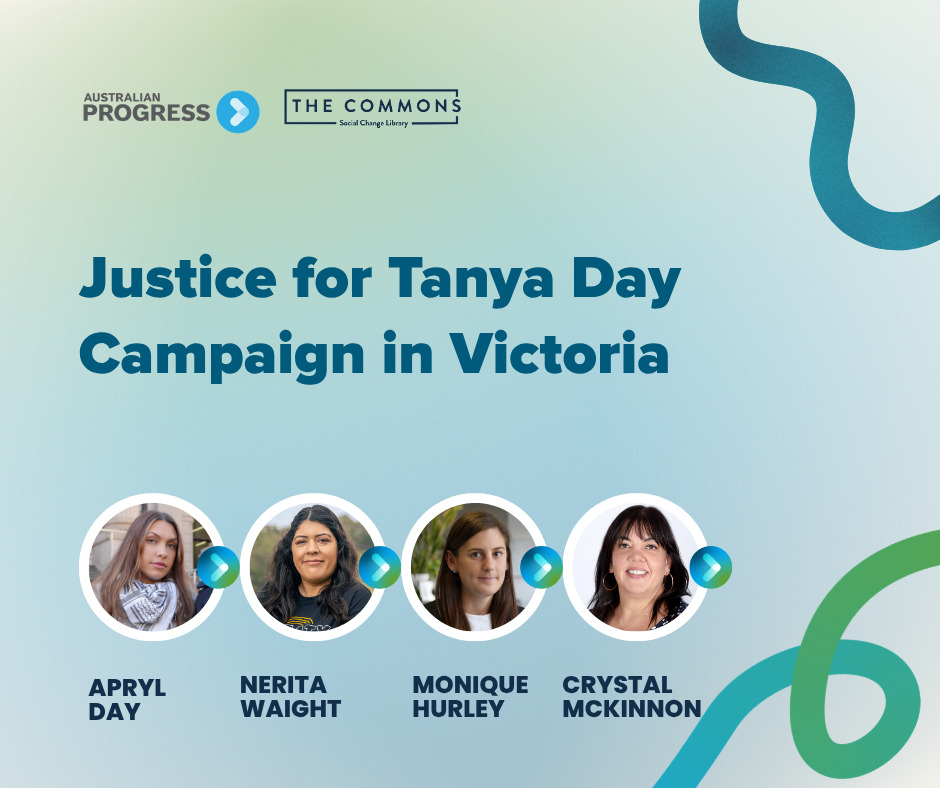
A coronial inquest followed her death, and since then, the Day family have led a powerful and successful campaign to decriminalise public drunkenness in Victoria. This article traces the story of the campaign, and shares reflections from the panel, including from Aunty Tanya’s daughter Apryl Day.
If the recommendations of Deaths in Custody had been followed, Aunty Tanya would still be with us. – Monique Hurley.

Royal Commission into Aboriginal Deaths in Custody
Key background for this case is the Royal Commission into Aboriginal Deaths in Custody, which concluded in 1991. The Commission examined 99 identified deaths in custody across the continent which occurred between 1 January 1980 and 31 May 1989, and produced a final report of 339 recommendations, many of which have not been implemented.
Recommendation 79, in the section called ‘Diversion from Police Custody,’ reads: “That, in jurisdictions where drunkenness has not been decriminalised, governments should legislate to abolish the offence of public drunkenness.”
Another recommendation, one which has been implemented, means that a death in custody triggers a coronial inquest. So, the Day family went to Inquest.
The Coronial Inquest
You sit there and you watch your family die over and over and over again. – Apryl Day
The Inquest was incredibly grueling for the family, and found that Aunty Tanya’s death was preventable. Throughout the inquest, the family’s legal team cross-examined over 30 witnesses over three weeks on whether systemic racism played a role in her death.
The Day family called for:
- Racism to be considered as a factor.
- Greater accountability for police, including for police to be recommended for prosecution.
You can read a copy of the Day family’s submission to the inquest here.
The footage shown in court showed the Ambulance Victoria officers dragging and pulling Aunty Tanya, treating her without any dignity. In the panel discussion, Apryl spoke of how even though her mum was horribly mistreated by Ambulance Victoria, St Vincents Hospital, and Victoria Police, the way the court is set up means you have to be selective in what you fight for. The Day family chose to focus on the police violence, and this choice was at the expense of exposing the full picture.
The Coroners court is set up unfairly and it’s a harmful place. We don’t even advocate for families to go to coronial inquests because it’s sending them into the same harm they’ve experienced. The burden falls on families to advocate in order for recommendations to be implemented. – Apryl Day
The hypocrisy was evident in the court. People who were chatting together with the police before the Court opened would then go and give evidence. Lawyers were smirking and laughing, but when the family gasped they were told to be quiet. The family was subjected to small aggressions that felt dehumanising.
In the end, the coroner found the train conductor’s behaviour was influenced by racism but not police behaviour. By focusing on an individual’s actions, the Court avoided making a judgement on systemic or institutional racism within Victoria Police.
Mobilising the Public
The campaign for Aunty Tanya successfully mobilised the broader community and became an incredibly high profile case, which at the time was unprecedented for coronial inquests.
I didn’t think we were doing anything different. We wanted to get it out there. I thought, let’s start making a Facebook page and events and publicise how we need support. People need to know what happened to her and how to rally behind us. It became a high profile case. Not every family is lucky enough to have that level of support around them. – Apryl Day
The family affirmed Aboriginal cultural practices over the court culture.
We brought a coolamon with soil and a photo and flag into the Coroners Court, we didn’t ask for permission. We didn’t stand when the coroner came in. Uncle Colin Walker, our most senior elder brought an intergenerational link with Deaths in Custody and he didn’t stand. We were not there to appease the coroner and were not going to disrespect our Uncle.
Educational sessions were held throughout Victoria, working to take away the secrecy of the Coroners Court. Typically, there are costs associated with getting Court transcripts, so without being there, it’s often impossible to know what has happened. In this case, so many people attended the Inquiry that the room overflowed.
One of the big changes your family got was getting people to attend plus daily updates on social media and IndigenousX. Holding the Court to account and those giving evidence, and demystifying what happens because the public can see what’s being said. This showed the Government and Court that people were watching. – Crystal McKinnon
The family noted the impact of doing small meaningful things like the #PinkForTanya campaign: on Aunty Tanya’s birthday each year, the 8th of September, everyone is invited to wear her favourite colour, pink. This was started by her 8 year old granddaughter.
The Findings
In a landmark decision, the Coroner referred the Victoria Police officers involved in Tanya’s death to the DPP for criminal investigation, on the basis that “an indictable offence may have been committed”. In a decision that speaks volumes about police impunity, the DPP notified the Day family that they will not be prosecuting the police officers involved in Tanya’s death.
At the time of Aunty Tanya’s arrest, Aboriginal women were 10 times more likely to be arrested for being drunk in public than non-Indigenous women. The decriminalisation of public intoxication was first recommended by the Royal Commission into Aboriginal Deaths in Custody over 30 years ago. Following extensive advocacy by the Day family, in November 2023, the Victorian Government finally decriminalised public drunkenness, a commitment made at the outset of the coronial inquest into their mum’s death.
Read the full findings of the Coroner.
Read the Coroner’s ruling on systemic racism.
Reflections
Decriminalisation is great but mobilisation is even bigger and implementing culture and bringing Mum into court that’s what built the movement. We shifted how families campaign now and how legal services operate. Protocols like no media release without family oversight. – Apryl Day
The case has created hugely significant reforms, but the work is ongoing. Queensland is currently looking to re-criminalise public drunkenness.
This case lays bare how the system targets different people and treats them differently. It also highlights the failed responses from ambulance and police. Aunty Tanya was called unruly but in fact she was sleeping. Compare this with a white woman at the pub the same night who was being unruly: she was taken home and wasn’t fined. – Crystal McKinnon
If the recommendations of the Aboriginal Deaths in Custody Royal Commission had been implemented, then numerous people would still be with us. Thirty years on and there’s still no political will: in fact, there’s a strong desire for the system to stay the way it is, oppressing and killing our people. Mass incarceration is a tool of colonial oppression. What is it going to take to save Blak lives? – Roxanne Moore
Zero cases of deaths in custody have included racism within the scope of the investigation. It’s a vicious cycle, the courts and police don’t want to be accountable or give up power. Calling it racism introduces a whole lot of work that Victoria Police would have to do. We’re happy that people can’t be arrested for drunkenness, but this change doesn’t go far enough because it’s not calling it what it is. – Apryl Day
Families are the only ones in the Court that aren’t funded. There are so many injustices. – Roxanne Moore
Campaigns need to be family led but not family dependant; we can’t step away because nothing happens. I shouldn’t have to be there at every meeting, but if I wasn’t nothing got done. – Apryl Day
It’s important to show up for one another. We can’t get complacent in the Aboriginal Deaths in Custody campaign. We all have a responsibility to lift the burden off the families, to allow families to find time to have a feed and a laugh, and to find joy. – Apryl Day
We fought so hard because we knew she would have done that for us. I love to see her legacy and how people participate. – Apryl Day
About the Speakers
- Apryl Day, Dhadjowa Foundation
- Crystal McKinnon, Associate Professor in History, Law and Justice at the University of Melbourne
- Roxanne Moore, Foundation for Young Australians
- Monique Hurley, Human Rights Law Centre