
Introduction
As part of the Progress 2026 conference Anat Shenker-Osorio delivered a session that discussed how race class gender narratives can work to fight fascism. Critical to this is helping people overcome fear, cynicism and disinformation by affirming positive visions. The following article summarises key points from the session. It also includes some of its examples regarding narratives and messaging concerning immigration in the US.
The Progress 2026 conference was hosted by Australian Progress on March 24-25 at the Melbourne Convention and Exhibition Centre in Narrm/Melbourne. This article was produced by The Commons Library to enable ongoing learning.

Undermining fear and cynicism
Anat began by reminding the audience that a key part of the fascist or authoritarian project is to erode the public’s will to resist. Indeed, she described this as its ultimate aim.
Fear is obviously one of the major impediments to fighting fascism, but another one is cynicism and a sense that, well, everything is so big and so overwhelming and so all-consuming. – Anat Shenker-Osorio
As a result it is critical that people avoid the understandable impulse to withdraw. Instead resistance must continue in order to impose costs for authoritarians in terms of their time, energy and self-belief.
Other than fear and cynicism Anat identified another danger, that of being so wedded to institutions that we have previously worked in and against that we fail to recognise that they no longer exist and that the opposition are using far different tactics than before. To paraphrase Scot Nakagawa, progressives keep trying to claim power at a table that is being carried out of the room. For instance, authoritarians no longer rely on poll testing and the occasional well crafted post or press release but push their messages constantly and relentlessly via every medium possible.
The opposition uses surround sound, not poll tested points. – Anat Shenker-Osorio
Authoritarians also advance their narrative via real world actions. By sending troops into US cities they have sought to prove that such action is necessary through the creation of confrontations that in turn garner heavy coverage in traditional and social media.
Overcoming unhelpful stories with affirming ones
In the US and other countries dominated by authoritarians three unhelpful stories have emerged about immigrants. The first is that, despite a lack of evidence, immigrants are villains causing a ‘crime wave.’
The second, coming from activists, is that immigrants are victims. Trying to get people to sympathise with those who have suffered horrifying conditions is understandable, but it generally only appeals to activists and removes the agency of immigrants themselves. Empathy rather than sympathy needs to be created.
A third unhelpful story that has emerged positions immigrants as valets, making them worthy for the fact that they do the jobs that no one else is willing to do. In doing so they are reduced to their economic value.
Anat argues that where these three narratives dominate, we cannot win.
What we actually need a message to do is be a full-throated, unapologetic, positive affirmation of what we want in the world. You have to make people long for something desirable and better.” Anat Shenker-Osorio
Breaking a signal through the noise
Although it becomes more difficult when activists are operating under authoritarianism there are key things that messages still need to do. Regardless of the specific issue and context they must “break a signal through the noise”, or to quote US singer Bonnie Raitt, “Give them something to talk about.” It doesn’t matter how well calibrated and crafted a message is if no one hears it.
To illustrate this point Anat gave an example from Minnesota, where the Muslim community faced racist vilification during the 2018 mid-term elections. In response they held an event which they dubbed ‘Super Eid.’ This invited the broader public to come to the city’s major sporting stadium to share food and engage in carnival games, pony rides and other fun activities. Coming at the culmination of Ramadan this positive, affirming event pushed back against hateful stereotypes and gave people “something to talk about.”
You cannot replace a something with a nothing. The only way to combat stereotyping and dog whistling and hate baiting is to do something. – Anat Shenker-Osorio
The event fed into a larger campaign called Greater Than Fear, which drew its title from the fact that the rural, and most conservative, parts of the state are known as Greater Minnesota. This was not just a publicity campaign, but also an organizing one and Anat underlined the importance of going beyond just crafting effective messages.
You need to be out in the world, not merely mobilizing, but actually having the one-on-one conversations with people in order to build political consciousness and will. You also need to do events, do activities out in the world that people can see happening. – Anat Shenker-Osorio
Values, Villains and Visions
When it comes to crafting a message, it should lead with values that cut across differences. Rather than beginning with a problem, and thus repeating the opposition’s talking points, the message should emphasize a shared value, belief or underlying desire in order to create a sense of common shared identity.
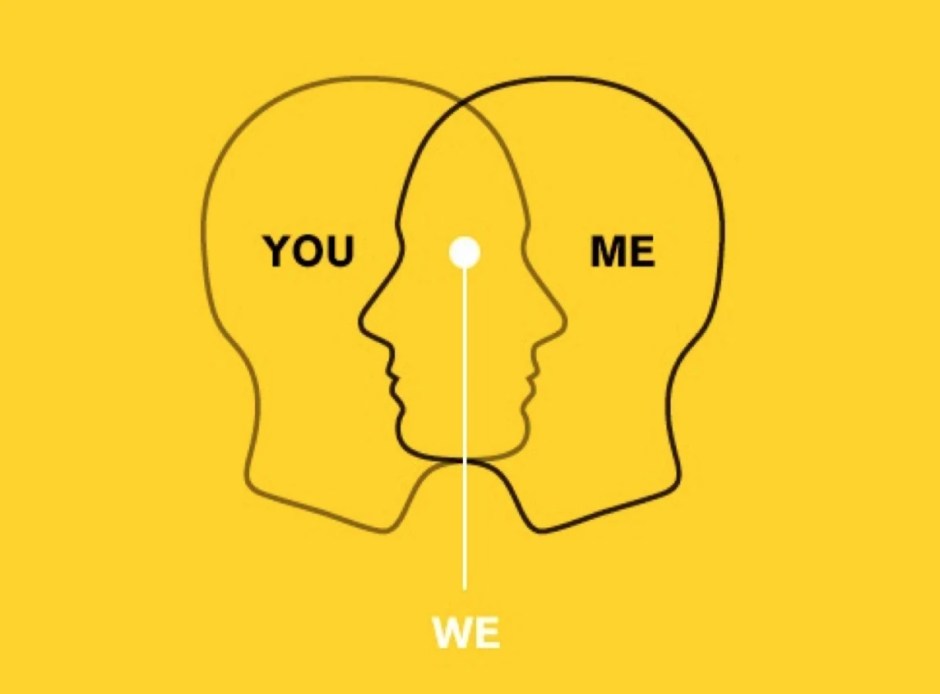
This can then be followed with a villain to make it clear who has caused the problem and is at fault.
When we don’t name a villain, we’re the villain, or the community on whose behalf we are advocating are kept in that fill in role, because that’s what authoritarians do. – Anat Shenker-Osorio
Messaging should close with a vision of the things that the campaign or movement is seeking to achieve.
Social Proof
Anat discussed the need for messages to create ‘social proof’, evidence which reinforces the fact that in taking action people will be joining others who are like them. By contrast activists should avoid reinforcing the social license for their opponents by amplifying and sharing their claims, for instance, that public opinion has turned on immigrants.
What we need to do is create opportunities for people to feel like they are part of the team. – Anat Shenker-Osorio
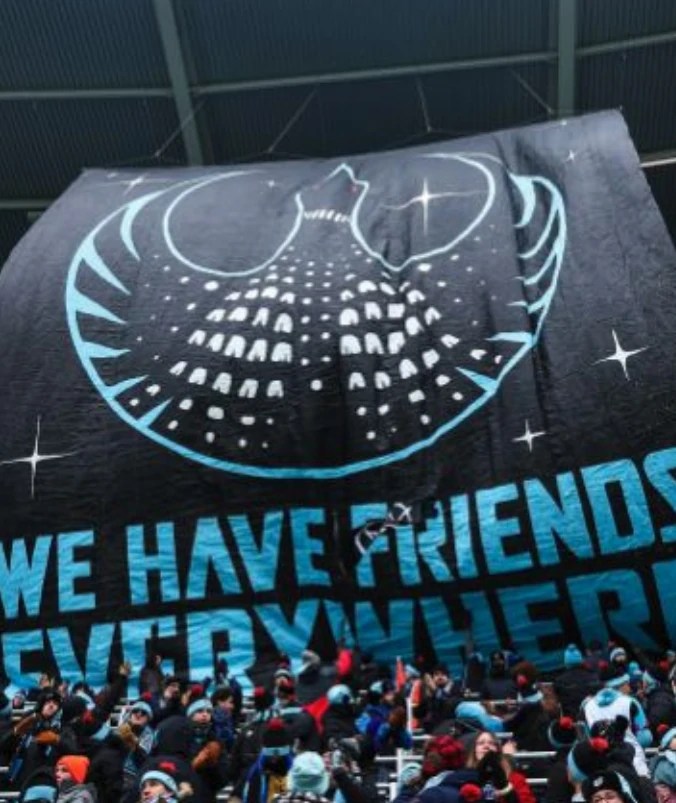
Social proof can be used to generate FOMO, fear of missing out, to encourage people to join a campaign. It can also draw on or create a shared symbol of group identity. A recent example is the use of the “rebel loon” as a sign of resistance to the anti-immigrant crackdown in Minnesota. This combines the state’s bird, the Common Loon, with imagery from Star Wars.
Supplanting the Dominant Narrative
Effective messages need to supplant the dominant narrative. The far-right uses a narrative that punches down by creating a cycle of resentment which blames marginalised groups for economic ills and threats to status. As Ian Haney Lopez has documented, it trades in racist scapegoating and gender panic to create the conditions where government can be blamed and attacked, and attempts to achieve universal healthcare, labour protections and other social goods nullified.

Trying to deal with this narrative by ignoring it, as many centre-left parties have done, does not work as it allows the toxic messages to go unchecked and uncontested. Instead a counter-narrative that emphasizes that cross-racial and gender solidarity can lead to government for all and shared prosperity and equality needs to be pursued.

Flipping the frame
An example of how far right framing can be challenged comes from the campaign against deportations by ICE (Immigration and Customs Enforcement) in the US during 2025 and 2026. During protests responding to a surge of activity by ICE and the DHS (Department of Homeland Security) the US government and its supporters engaged in provocative actions and drew on framing that depicted protesters as dangerous, lawless rabble-rousers. This was turned on its head in Portland, Oregon when a protester appeared in an inflatable frog costume, which made the situation and visuals of armed and militarised law enforcement facing off against them appear ridiculous. Thanks to the costumes the narrative was flipped from “protesters versus law enforcement” to become “fascists versus frogs versus the evil regime.” Savvy organisers quickly bought up costumes and established a costume lending library at the ICE headquarters to keep the narrative rolling.
A key element of fighting fascism is ridicule. – Anat Shenker-Osorio

Building a narrative machine
In Minnesota the situation and local culture were different so an alternative frame was required to defeat government narratives concerning immigrants and those acting in solidarity with them. This sought to shift the message from “protesters versus law enforcement” to “the golden rule, neighbors standing up for neighbors versus the evil regime.”

As documented by Jiggy Geronimo, on their Defiance Dispatch Substack, a ‘narrative machine’ was already being created. This had begun with a “drumbeat narrative” during earlier protests which focused on a human centred message that “ICE is terrorising our communities and abducting our neighbours”. On an organising level, community defense trainings were held which focused on how people could be alerted to ICE’s presence via whistles and other means. They also trained people in how to be a legal observer and engage in mutual aid.
People were also taught and encouraged en masse to bear witness and film ICE and DHS aggressions. This footage was then shared as widely as possible. The constant drumbeat of proof from across the country began to shift the narrative away from the policing of protests to showing, rather than telling, people the negative impact ICE was having on the community. This in turn illustrated and justified the need for protest.
The inflection point, or viral moment, came with the murder of two activists in Minnesota, Renee Nicole Good and Alex Pretti. Because of the priming that had already occurred the government’s narrative that these killings were either justified, or unfortunate accidents, was countered by one that held that they were the obvious outcome of ongoing ICE violence. When combined with the existing drumbeat narrative these terrible events triggered a wave of anti-ICE sentiment and protest.
Deliberate choices were then made by activists to not just focus on the “harms and horrors” of the situation but also on the solidarity work being done in Minnesota. In doing so, those resisting ICE were honored as heroes. Beyond what was being done on social media, Anat and others helped journalists to connect up with detainees in Minnesota but only if they also agreed to also interview and ride along with activists involved in mutual aid and other activities. This helped lead to a breakthrough point at which social proof was achieved. More and more people across the US began to speak out against ICE, often in contexts and forums where politics were rarely discussed. The social license for taking action to support immigrants was also broadened.
It’s an extraordinarily hard time, with extraordinarily hard tasks. One of the most important things we need to remind ourselves of is that we did, we can, we will, we have, in fact, pushed the needle forward on greater equality, on greater recognition, on greater acceptance of different people and the need to actually share this planet and the things on it. And it is because of those gains that the right is clapping back this viciously, this furiously. – Anat Shenker-Osorio
Explore Further
- Messaging guides on a range of issues from ASO Communications
- How to Change the Narrative / Story: Guides, Worksheets and Templates
- Narrative, Storytelling and Messaging Directories and Libraries
- Race Class Narrative Messaging Guides and Checklist
- Framing Issues for Social Justice Impact: Directory of Messaging Guides
- Narrative Change: Start Here
- Authoritarianism: How You Know It When You See It
- Democracy Undone: The Authoritarian’s Playbook
- Confronting Authoritarianism and Organizing Resistance: Case Studies and Lessons Learned
- Creative Resistance: Lessons from Minneapolis, Minnesota
- Explore the Australian Progress collection on The Commons Library
- Explore more resources from Progress 2026
- Australian Progress Events & Training