
Introduction
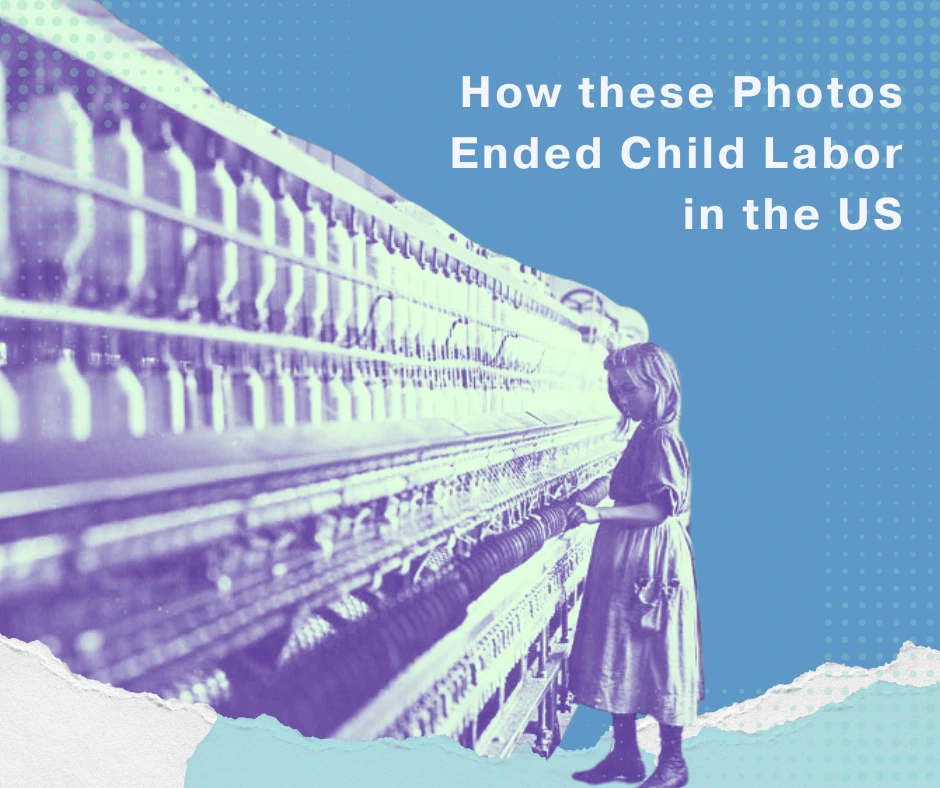
Watch this video by Vox Media about how Lewis Hine’s photographs transformed public understanding of child labor in the United States, helping to drive legislative reform and return children to school. His photo stories, the powerful blend of image and text, humanised the daily realities of child labourers in a society that had largely looked away.
Through intentional framing, Lewis personalised each child’s experience:
- using portrait-style shots that kept children in sharp focus while softening the background
- capturing recurring scenes where industrial machinery appeared in the frame but never dominated it, signalling the scale of the issue
- shooting at the children’s eye level, creating the feeling that they were looking directly at the viewer. These techniques invited empathy, making the systemic problem impossible to ignore.
Hine was one of the first to use a camera as a tool for social documentary to shine a light on the mostly unseen. He understood early on the power images have to tell stories. – Source
Video Description
“The 1900 US Federal Census revealed that 1.75 million children under the age of 16, more than one in five, were gainfully employed. They worked all over the country in cotton mills, glass blowing factories, sardine canneries, farms, and even coal mines. In an effort to expose this exploitation of children, the National Child Labor Committee hired a photographer to travel around the country and investigate and report on the labor conditions of children.
Lewis Wickes Hine photographed and interviewed kids, some as young as 4 years old, and published his findings in various Progressive magazines and newspapers. Once the public saw the plight of these children, state legislatures were pressured to pass bills regulating labor for workers under the age of 18, effectively bringing an end to child labor in the United States.” – Source
Watch Video
Explore Further
- National Child Labor Committee Collection by Lewis Hine, Library of Congress
- The Photographer Who Forced the U.S. to Confront Its Child Labor Problem, The Smithsonian
Lewis Hine’s early 20th-century “photo stories” sparked meaningful legislative reform - Activism, Photography and Workers’ Collective Leadership: A Conversation with Taslima Akhter, Asian Labor Review Journal article
- How Labour Activism changed the landscape of post-war USA
American Job — A new exhibition revisits over 70 years of working class solidarity and struggle, its radical legacy, and the central role of photography throughout. - Dorothea Lange + Migrant Mother, Kennedy Center
- Portraits and protest: workers’ rights (1848–2000), National Portrait Gallery
- Photographers as Changemakers, Mitch Nivalis
- Photovoice: Ethical Photography for Social Change
- Transformational Ethical Story Telling (TEST) Framework
- Empowering & Supporting Storytellers: Tools for NGOs & Advocates
- Workers Rights Hub