
Introduction
During South Korea’s 2018 School MeToo movement, students publicly reported sexual harassment and assault by teachers. But another question remained: how had schools and education authorities responded? In 2019, Political Mamas, a South Korean nonprofit founded by mothers, and open to other caregivers, began requesting records from regional education offices and mapping publicly reported allegations. The campaign aimed to make institutional responses visible, identify gaps in investigations and disciplinary action, and strengthen accountability for student safety.
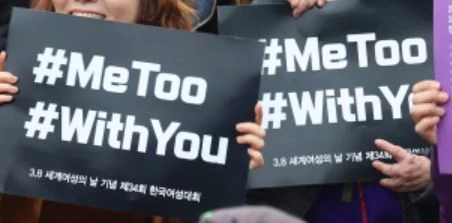
South Korea’s wider #MeToo movement gained momentum in early 2018 after prosecutor Seo Ji-hyun publicly described sexual harassment she had experienced. One Yonghwa graduate later told WomenNews that seeing Seo and Hollywood actresses speak out had encouraged her to do the same. In March 2018, former students of Yonghwa Girls’ High School in Seoul formed a committee and gathered accounts of sexual violence at the school through social media. On 6 April, current students used sticky notes on classroom windows to display #MeToo and #WithYou messages in solidarity with the graduates. Images of their action spread online, helping bring School MeToo to national attention.
Students could describe their experiences publicly, but schools and education offices controlled the records needed to assess the response to their complaints.
After Students Spoke, Who Answered?
For students, speaking publicly carried personal risks. As the Korea Times reported in 2018, teachers’ influence over grades and university entry made it difficult for students to challenge them. Interviews published by WomenNews in 2021 also described hostility from teachers and classmates after students spoke out. One former student at Chungbuk Girls’ Middle School recalled how pressure from the school had weakened their organizing efforts.
South Korea’s Official Information Disclosure Act provided a legal route to request records, while allowing exemptions for protected personal information. Each of the 17 regional education offices oversees schools in its own area, so the group had to submit separate requests. According to Political Mamas, the Education Ministry had not compiled nationwide School MeToo data for 2018. Students could describe their experiences publicly, but schools and education offices controlled the records needed to assess the response to their complaints.
Political Mamas also mapped publicly reported allegations. The map made reports visible across schools, while the requested records could reveal how authorities had responded. This combination connected public testimony with demands for institutional accountability. In March 2019, the group requested records from 16 regional education offices, excluding Jeju, where the group said no School MeToo cases had been reported. According to the group, 15 refused to disclose the requested records, prompting a lawsuit against the Seoul education office that May.
Naming the schools helped Political Mamas identify discrepancies in the records and ask the education office to explain them.
Making School Responses Public
In March 2020, the Seoul Administrative Court ordered disclosure of most handling records, excluding the teachers’ names and audit reports. The Seoul High Court upheld the ruling in that December. However, when Political Mamas requested updated records in 2021, the Seoul education office still withheld school names. Without names, responses could not be linked to these schools. A further lawsuit produced an April 2022 ruling that school names alone did not identify individuals and that disclosure served public scrutiny. The case challenged how authorities balanced personal privacy against institutional accountability.
The disclosed records also raised questions about disciplinary responses. In an MBC radio interview on 8 June 2022, a Political Mamas activist said that 96 of 151 teachers reported to investigative authorities by schools and education offices had received no disciplinary action and remained in classrooms. The interview framed disclosure as a question of whether authorities had acted on complaints.
The group’s final Seoul analysis, published on 27 June 2022, covered 94 schools and 188 teachers named in allegations. It identified one school entirely absent from earlier records. At another school, an earlier disclosure listed dismissal, while a later record listed a warning. Naming the schools helped Political Mamas identify discrepancies in the records and ask the education office to explain them. The website made documents available for checking, while radio and press releases explained why their contents mattered beyond the legal dispute. In the same announcement, the group also invited survivors and witnesses to provide testimony, and outlined plans to use their accounts alongside the records to seek audits of schools and education offices and report cases of alleged child abuse.
In Gyeonggi, the group reported that an initial response provided 16 records for 2018-2021 without school names. After litigation began in 2023, renewed requests produced 100 records that April and 104 in November, now including names. The group questioned whether the changing totals reflected concealment or poor record management. In February 2024, a Gyeonggi official told Seoul News that the office had supplied information it could collect across more than 50 requested categories. The court dismissed the case in May 2024 because the requested information had already been provided during the litigation. Although the case ended without a ruling on the original refusal, the group had obtained records that were previously unavailable.
The disputes continued elsewhere. In North Chungcheong, the education office provided most requested information during litigation but continued to withhold investigation-status records. On 2 April 2025, an appeals court overturned the earlier ruling that had allowed those records to remain undisclosed. The decision required disclosure of information about investigations and their outcomes, expanding what the public could potentially examine.

Sources: Political Mamas’ School MeToo project and Seoul records and analysis (in Korean)
Winning disclosure must be followed by checks for gaps and inconsistencies in the records.
What Changed, and What Can Others Learn?
The campaign secured access to previously withheld records in Seoul and Gyeonggi. In North Chungcheong, an appeals court ordered the disclosure of investigation-status information previously withheld by the education office. The records obtained in Seoul and Gyeonggi made it possible to identify schools, compare disclosures, and question inadequate or inconsistent responses. Yet access remained uneven across regions. In October 2022, Kyunghyang News reported that 11 of 17 education offices had withheld school names even from the National Assembly. The campaign achieved important gains in transparency, but consistent nationwide disclosure remained a wider goal.
The disclosed records also revealed gaps in what could be verified. Political Mamas’ June 2024 Gyeonggi analysis covered 112 cases from 2018 to September 2023. The employment status of the implicated staff was not recorded in 33 cases (29%). For survivors, the lack of clear information carried personal consequences. In a 2023 interview with Sherlock and BabyNews, a School MeToo complainant from North Chungcheong described how the absence of public information had allowed rumours questioning her account to persist. Winning disclosure must be followed by checks for gaps and inconsistencies in the records. However, it remains unclear whether these efforts led to better protection for students or further disciplinary action against teachers.
For other movements, the practical lessons are to connect public testimony with targeted record requests, make findings accessible, and pursue incomplete answers. The Seoul campaign shows the time and legal support sustained scrutiny can require. Gyeonggi illustrates how further records may become available during litigation, while North Chungcheong shows why an initial court defeat need not end a campaign. Across these cases, obtaining information was not the end of accountability, but a means of making institutional responses open to continued public scrutiny.
Communication for Social Change
This article was submitted to The Commons by a student completing Communication for Social Change at the University of Queensland. Explore other case studies from UQ students.
Explore Further
- School MeToo in South Korea: Student activism and demands for change (Yonhap, 29 October 2018, in Korean)
- School MeToo survivors’ accounts (WomenNews, 7 July 2021, in Korean)
- Political Mamas’ School MeToo project and map (in Korean)
- Seoul disclosure records and call for survivor testimony (Political Mamas, 27 June 2022, in Korean)
- Uneven disclosure of School MeToo records nationwide (Kyunghyang News, 3 October 2022, in Korean)
- School MeToo disclosure and survivors’ perspectives (Sherlock and BabyNews, 4 May 2023, in Korean)
- Gyeonggi disclosure records and data gaps (Political Mamas, 3 June 2024, in Korean)
- North Chungcheong information-disclosure appeal (Political Mamas, 4 April 2025, in Korean)
- South Korea’s Official Information Disclosure Act (English translation, 2020 version)
- Organising: Start Here