Introduction
This guide was produced by CIVICUS staff with input from the CIVICUS Protest Lab, a collective of activists from across the globe who came together to document, share and strengthen knowledge on the right to peaceful assembly. It draws on lived experience and is dedicated to all those who risk their safety to exercise this fundamental freedom.
Every action, no matter how small, contributes to the longer journey toward justice.
Freedom of peaceful assembly is a fundamental right that enables people to come together, express collective concerns and demand accountability. Across the world, this right is increasingly restricted, minimised and eroded through repression tactics designed to deter participation such as arrests, intimidation, surveillance and torture. Yet the ability to organise and gather remains essential to democratic life and social justice. Even in restrictive environments, people and communities continue to find safe and viable ways to assemble, recognising that collective action is both a right and a necessity. We gather not only to make our voices heard, but to honour those who struggled before us, to protect the present, and to safeguard the future.
At the heart of every act of assembly is hope, hope that change is possible, hope that solidarity can overcome fear, and hope, again and again, that collective courage can shape a more just and humane world.
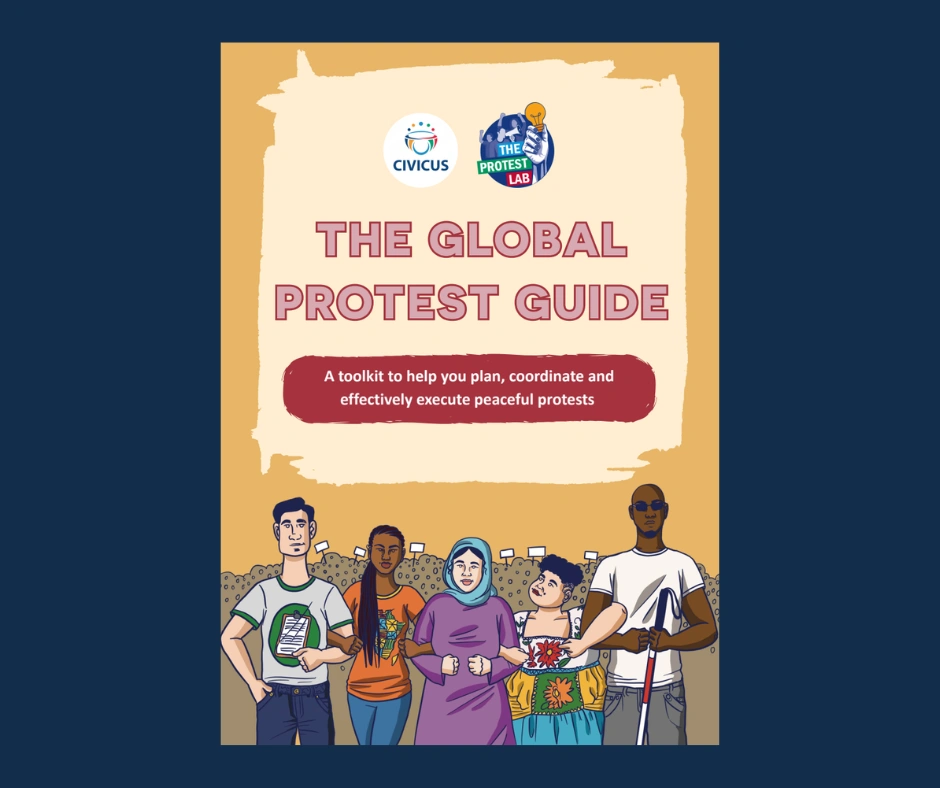
This guide seeks to support planning of coordinated, effective and safe protest actions. It provides practical guidance for people who want to organise or participate in peaceful assemblies across diverse political and legal contexts. It is structured in three parts: before, during and after a protest. Each section contains practical guidance, case studies and exercises drawn from real-world scenarios. Each exercise includes instructions for individual or group use and can be adapted to different contexts.
Contents
Introduction … 8
Before the Protest … 5
Coordination Team … 7
Protest Site … 9
Organising Tools … 10
Partner Mapping … 14
Digital Safety … 17
Communication with the Authorities … 19
During the Protest … 20
Safety … 23
Wellbeing … 26
Documentation Protocols … 27
After the Protest … 28
Immediate Steps (within 24 Hours) … 29
Further Steps: Accountability and Sustainability … 30
Access Resource
Explore Further
- Prepare for a Protest Checklist
- Digital Security Checklists for Activists
- Power and Protect Safety Library
- Streetwise & Steady: A Workbook for Action Peacekeepers or Event Marshals
- Movement Memo – Developing Strategic Capacity and Cultivating Collective Care: Towards Community Power
- Protest templates and checklists
- Protests: Start Here