Introduction
The Commons is building a Tactics Toolkit with helpful guides on a broad range of campaign actions.
Each tactics guide explains what the tactic is, its benefits and challenges, how to put it into practice, and includes examples and case studies (with videos), deeper resources, and links to related guides.
Do you have a tactic guide to add to the toolkit, or funds to help us build it? Get in touch!
The Tactics Toolkit is still under construction! More coming soon!
Tactics
Accountability Session
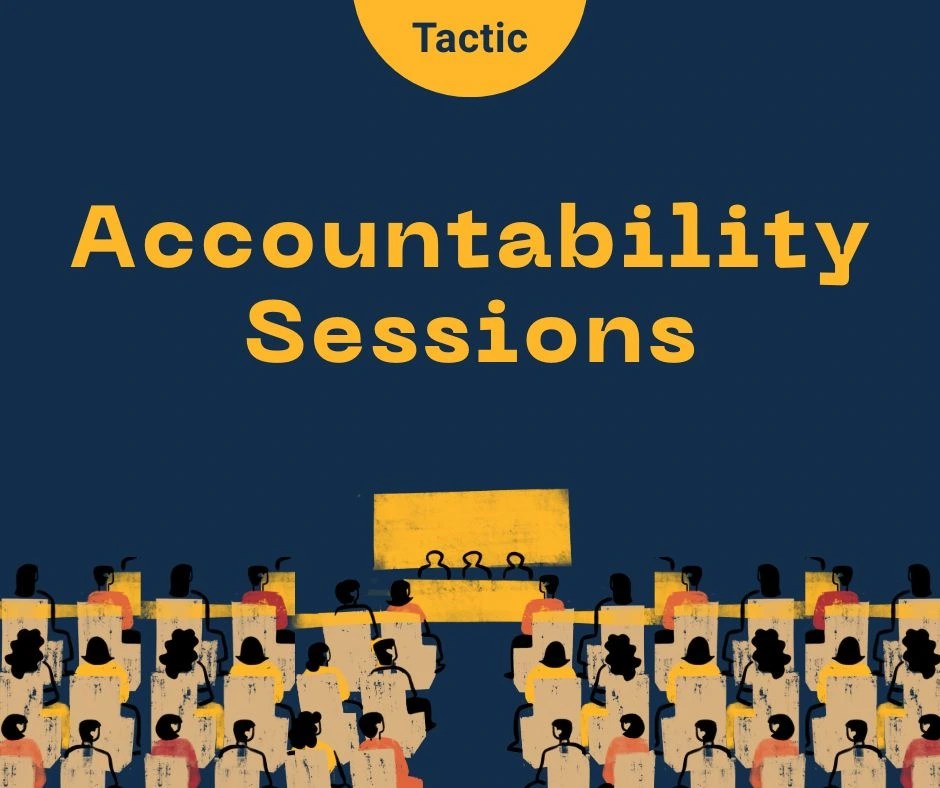
Accountability Session – The Accountability Session is a tactic used in community organising to demonstrate power and hold decision-makers accountable.
Bird-dogging
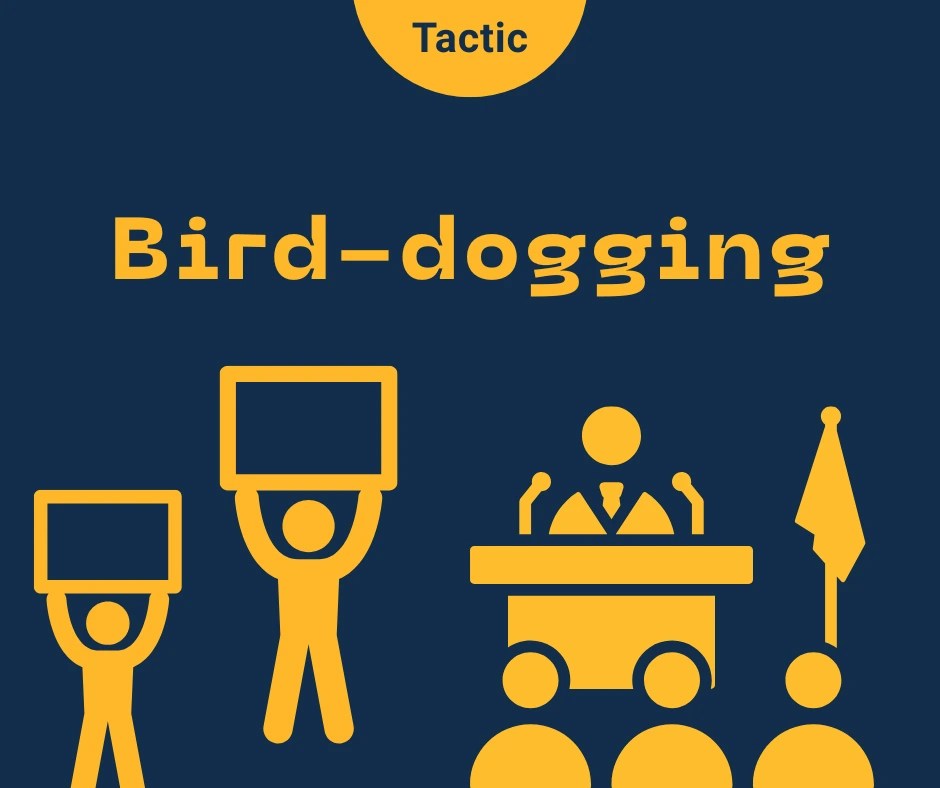
Bird-dogging – This tactic involves neither birds or dogs! It’s all about tracking your target and showing up at public forums to put your issue on the agenda.
Consumer Boycotts

Consumer Boycotts – The organised refusal to purchase or use goods and services from a business, organisation or country. By lowering profits and generating negative publicity they can pressure opponents into changing policies, practices and investments.
Flash Mobs

Flash Mobs – A spontaneous, contagious, and often celebratory protest that often uses social media or word of mouth to gather people on short notice in a particular place at a particular time. – Beautiful Trouble
Sit-ins

Sit-ins – A sit-in involves occupying an indoor space and holding it for a period.
Stickers

The Free Sticker – A free sticker tactic is a campaign strategy that uses free stickers to spread a campaign message, build brand recognition, grow a supporter base and generate donations.
Tripods
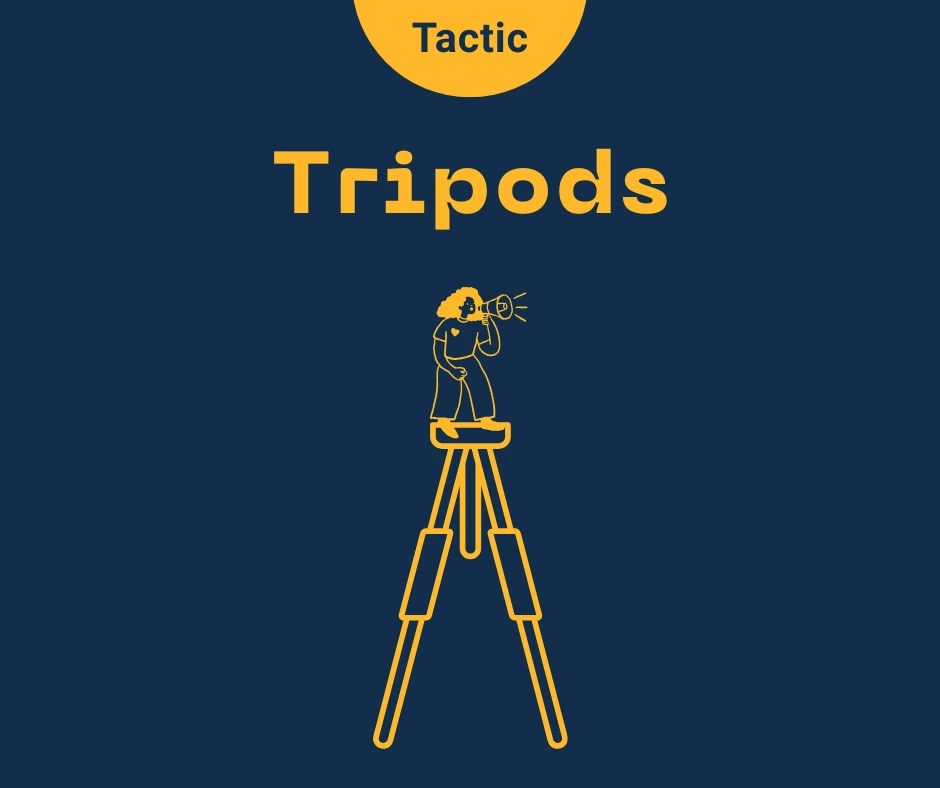
Tripods – A tripod is an independent, free standing three pole structure that is lashed or clamped together and occupied by a person to blockade a road – Earth First Direct Action Manual
Methods of Nonviolent Action
The Tactics Toolkit builds on the classic 198 Methods of Nonviolent Action by Gene Sharp. Sharp defined different categories of tactics:
- The Methods of Nonviolent Protest and Persuasion
- The Methods of Social Noncooperation
- The Methods of Economic Noncooperation: Economic Boycotts
- The Methods of Economic Noncooperation: The Strike
- The Methods of Political Noncooperation
- The Methods of Nonviolent Intervention
Noncooperation

Noncooperation – Noncooperation is when we deliberately and strategically do not cooperate with our opponent.
Help Build the Tactics Toolkit
The Commons Library is seeking contributors, collaborators and funders for the Tactics Toolkit.
- Have you run or observed a tactic we should include? Let us know your ideas.
- Keen to write up guides to tactics? We welcome volunteer contributors and can provide guidance and a template.
- Can you or your organisation sponsor the Tactics Toolkit? A donation of $5000 (AUD, approximately US $3500 or Euro 3000) enables The Commons to add more tactic guides to support crucial community action. We’ll consult you about priority tactics and provide an online training session about the toolkit for your team.
Contact The Commons librarians.