Introduction
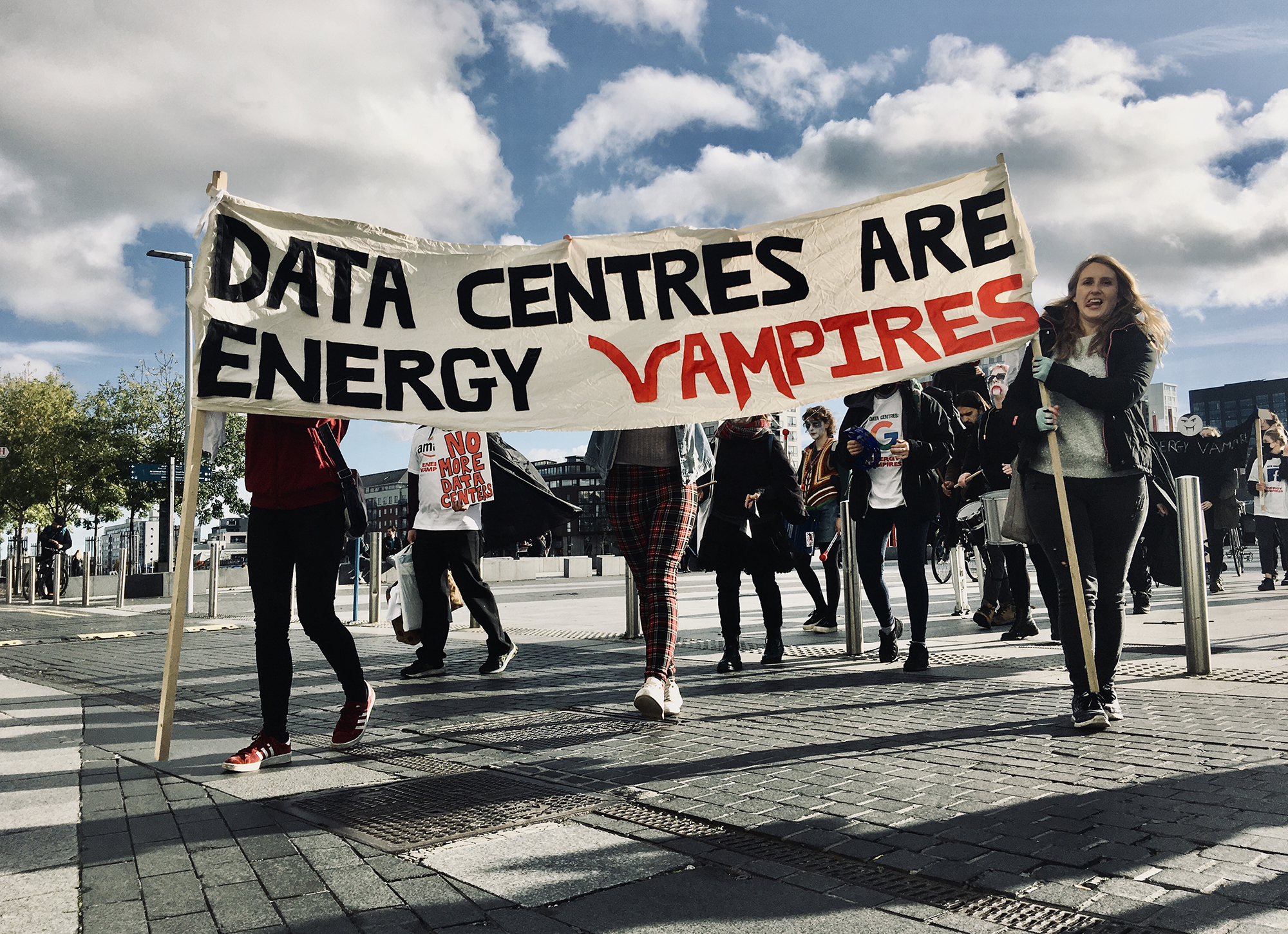
The AI boom is fast-tracking data centre builds around the world, but communities are building power to stop them.
Data centres have significant harms, from huge use of power and water, air and noise pollution, increased energy costs, and use of land which could be used for affordable housing or nature preservation. Campaigns and community organising has slowed and stopped developments in many places.
The Commons librarians have gathered toolkits, videos, research and reports to inform you. Please note that rights and regulations vary across state and national borders, so check the situation where you are. Help us keep this overview up-to-date by sharing your own guides and those you come across.
Most data center fights have been won by engaged community members getting organized, learning the facts, and growing their numbers. When hundreds or thousands of people show up at commission meetings or city council meetings refuting big business talking points, city and county officials cannot ignore us. – Site Fight Guide
What is a Data Centre?
Excerpt from the Site Fight Guide by the Data Center Working Group:
“Data centers are giant warehouses that hold computer servers, chips, storage, and networking equipment (aka the hardware that enables computing and the “cloud”). They power everything from video streaming to social media to artificial intelligence (AI). Data centers have existed for a long time, for use by telecoms companies, hospital systems, universities, and the government, but we are currently seeing a rapid buildout of much larger, more energy-intensive facilities that are primarily used for AI, as well as cryptocurrency mining and cloud storage.
These noisy, hot warehouses require immense amounts of power to run, water to cool, and land to build on. The tech companies behind the global AI “race” have pushed this rampant expansion—with many companies speeding past local environmental, water, air quality, labor, and land regulations in the process, as well as basic community approvals or local buy-in. Many proposals are hidden behind Non Disclosure Agreements, so neighbors do not see the plans in advance until agreements are already set in stone.
Lots of data centers’ computing power is used for products that everyday people don’t want, such as data collection, manipulating our viewing and buying habits, targeted advertising, facial recognition, chatbots, and other tools that aim to replace people with grounded expertise.”
What’s a hyperscaler?
“The current buildout consists mostly of hyperscale data centers, also known as hyperscalers. The name refers to their immense power capacity and size, often consuming over 100 megawatts of power capacity… Data centers being developed for AI can use as much electricity as 900,000 households (approximately 1 gigawatt) and consume the same amount of water as a city of 50,000 people.”
Toolkits
North Star Data Center Policy Kit
AI Now Institute (USA)
“This policy toolkit is primarily geared toward stopping, slowing, and restricting rampant data center development in the US at the local and state level. Our approach recognizes the extractive relationship between data centers and local communities: Hyperscale data centers deplete scarce natural resources, pollute local communities and increase the use of fossil fuels, raise energy costs for everyday ratepayers, pull tax dollars away from community needs, and fail to deliver on overpromised economic developments.
This toolkit is intended to help organizers and policymakers identify the strongest possible actions. Recognizing that the North Star policy may not always be feasible, we also offer scaffolded protections that put people above corporate profits.”

How to use the toolkit:
- The toolkit is intended as a menu of options to be analyzed in relation to local and state conditions.
- Not every intervention will be feasible in every locality, state, or region due to differences in local and state laws, existing regulation, and political conditions.
- The issue-specific recommendations (water, energy, air quality, and so on) can be used both to limit the impacts of data centers and to act as mechanisms to restrict data center development when they do not work in the community’s best interest.
- We provide examples of existing or proposed policies, with notes indicating that they are very strong, strong, or weak. Please note that inclusion in this toolkit does not mean we endorse the example or specific language used. In cases where there is no strong example, we have consulted experts and community advocates to identify the North Star policy action, threshold, or quantitative targets.
Explore Local Interventions, State & Regional Interventions and Federal Interventions.
Issue areas:
- AI Regulation
- Air Pollution
- Bans and Moratoriums
- Corporate Power
- Economic Development
- Energy
- Noise
- Ratepayer Protections
- Transparency
- Water
- Zoning & Land Use
Download the full toolkit in PDF.
Site Fight Guide: Stop Data Centers, Free the Robots
Data Center Working Group (USA)
“This guide supports community members and organizers to launch a data center site fight, or join ongoing efforts. It breaks down what data centers are, strategies and organizing tips to start a data center fight, a primer on data center impacts and myths, research and policy resources, sample messaging, and real-life examples of campaigns.”
Quick links to tabs:
- 1:1: What is a Data Center?
- Starting a Data Center Fight
- Understanding Data Center Impacts
- Resources
- Real-Life Examples
- Contributors
This is a hugely bipartisan movement. Data center site fights are engaging communities and demographics across the nation that are hard to reach on other issues. You may find many opportunities for collaboration in unexpected places. Take this rare chance to build ties—by educating and working alongside people on this front, we may be able to build a wider advocacy base for other local environmental justice issues. – Lauren Posey, Protect PT (Pennsylvania)
No Data Centers Toolkit: Honor the Earth
Waters across Turtle Island face a new threat: hyperscale data centers. These massive computing facilities are being built at an alarming rate, consuming millions of gallons of water a day and threatening Mother Earth.
Tech giants are targeting Tribal and rural lands for the construction of these data centers. Once again, Indigenous, Black, and Brown peoples pay the price for the convenience of AI while powerful corporations profit. This is a new form of extraction, no different from the mines and pipelines we have long resisted.
These companies target our resilient lands because they believe rural, coal-dependent communities lack the political power and financial resources to fight back. They bank on us being divided and overlooked. But they have underestimated the power of our Peoples when we unite in defense of what is sacred. They underestimate the strength of our Peoples that have stewarded this land for millennia.
From the Southwest to the Great Lakes, communities are rising up against tech companies seeking to build their AI fortunes on our land and water. We are standing with them and connecting these battles into a unified movement.

Honor the Earth’s No Data Centers Toolkit includes:
- Data Center Myths & Facts
- Flyers and Leaflets
- Template Presentation
- Data Center Tracker: Proposed Data Centers in and near Indian Country
- Questions to Ask Data Developer Companies and their Representatives
- Articles and Resources on Data Center Development
- Wins Against Data Centers
- Guide to Building Campaigns
- Potential Interventions your Community can take against the build out of AI infrastructure
How to Resist Data Centers: A Guide For Local Communities in Europe
AlgorithmWatch (Europe)
“As data centers proliferate across the globe, local groups are mobilising to document the severe harm these facilities inflict on their regions and the immense strain they place on energy resources. We have compiled a set of practical steps that communities can take to educate themselves when a data center is planned in their area, and to address its potential impacts.”

What You Can Do If a Data Center Is Coming to Your Community:
- Check the zoning and land use
- Request planning and environmental documents
- Engage local officials and demand public hearings
- Connect with others, locally and across borders
- Connect with experts
- Demand transparency and accountability
- Advocate for policy reforms that fit your region
- Envision better infrastructure
- Shift the frame
Toolkit for the Field: An Organizer’s Guide to Stop Data Centers
MediaJustice (USA)
A toolbox for on-the-ground organizers getting started with resisting hyperscale data centers in their communities. Resources include campaign best practices, outreach templates, and organizing tools to help with:
- Basebuilding In Your Community
- Local Research
- Building Your Campaign Strategy
- Telling Your Story
The toolkit’s templates mean campaigns don’t have to start from scratch. Simply update the factsheet, flyer, slide deck, press release, op-ed, or doorknocking script to fit your local context.
Across the country, the people are saying no – organizing and pushing back against the chaos and harm inflicted by a handful of wealthy tech corporations and their relentless, extractive projects. We give thanks to the organizers and communities who are on the frontlines, and whose experiences resisting data centers shaped this toolkit. – MediaJustice
The People Say No: Resisting Data Centers
MediaJustice (USA)
“The People Say No: Resisting Data Centers Toolkit is an offering to build knowledge, power, and resistance to one of the most dangerous extraction projects of our time – AI and data center expansion. The rise of artificial intelligence is behind massive data center buildouts as the world’s largest tech corporations— also known as Big Tech—are spending billions of dollars on these power-hungry facilities. Tech corporations are marketing data center projects as “progress.” The reality is that tech giants like Microsoft, Google, Amazon, and Meta are devouring our finite resources—energy, water, and land—and wreaking havoc on our communities. Pollution from data centers is suffocating frontline communities, contaminating and depleting drinking water, and destroying ecosystems necessary for our survival. Meanwhile, monthly utility bills spike as tech corporations offload the costs of their infrastructure upgrades onto everyday people.
This toolkit is aimed at helping communities cut through the propaganda, disinformation, and secrecy that are powering rapid data center development. Whether your community is currently battling a data center project – or looking to create protective measures for your land, energy, and water – we hope this toolkit can help strengthen your fight and move us towards a world where people aren’t being poisoned in the name of innovation, where communities aren’t competing with corporations for water, and where Big Tech doesn’t get to take over democratic processes aimed at protecting people and the environment we live in. Tech companies would like us to believe that data centers are inevitable. But we know, when we fight, we win! In the past two years, at least 142 activist groups across 24 states have organized to stall or stop data center projects throughout the U.S. MediaJustice is ready to fight and be in solidarity with local communities fighting Big Tech extraction.”
Contents:
- Letter from MediaJustice | 3
- Introduction to the Harms of Data Centers and Their Rapid Expansion | 4
- Fact or Fiction | 5
- Case Studies | 10
- River of Life | 12
- Reframing the Story | 14
- Myths and Messaging | 15
- Messaging Worksheet | 17
- Data Center Factsheet | 19
- Scenario Role Plays (with Printouts) | 23
- Building Our Fight | 31
- When We Fight, We Win (with Printouts) | 32
- Mapping Our Knowledge | 41
- Research Sheet | 43
- Glossary of Terms | 46
- Resources | 47
- About Us | 48
How to Stop a Data Center Near You
Food & Water Watch (USA)
- Step 1: Know Your Voice Matters
- Step 2: Sound the Alarm to Your Community
- Step 3: Apply Pressure to Leaders with the Power
View the related video below.
Videos
How to Stop a Data Center in Your Community!
Food & Water Action (USA)
North Star Data Center Policy Videos
AI Now Institute (USA)
- North Star Data Center Policy in Practice Training Series
- North Star Data Center Policy in Practice Spotlight:
AI should be understood as a technology which concentrates power… We’ve ended up in this position where, whether it’s AI or the data center buildout, we’re talking about concentrations of power at many levels. – Amba Kak, AI Now Institute
Organizing Against Data Centers Video Playlist
MediaJustice (USA)
Want to get involved in a data center fight? Or want to build your own campaign against an emergent data center proposal in your region? Here’s a one-stop shop for learning from local campaigns across the USA, how data centers follow a legacy of corporate extraction on our communities, and what you need to fight back.
Big Tech Takeovers Video Playlist
More Perfect Union (USA)
Covering the impacts of Big Tech data centers on communities across the United States.
Data Centres and Energy
Ketan Joshi and Linda McIver, Australian Data Science Education Institute Podcast (Australia)
Maps
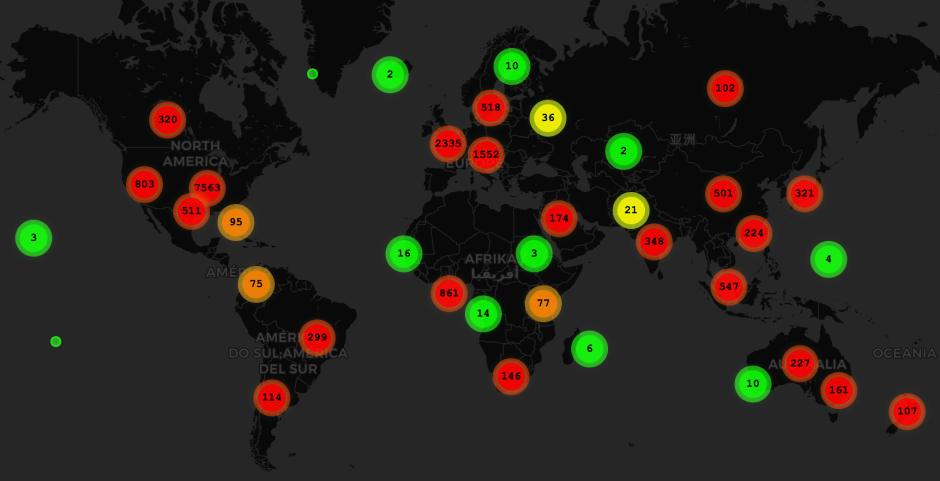
- Data Center Map (Global): Global Infrastructure Intelligence. This map is open source with files available on GitHub.
- Brockovich AI Data Center Reporting (USA): A map of major AI data centers in the U.S. that are either operational or under construction, overlaid with locations where community members have reported concerns.
- AI Data Center Map (USA): This map exists for the public good, to help communities understand the resource impact of nearby infrastructure and to support informed, peaceful action.
Research, Articles and Statements
Global
- The data center fight is going global, Waging Nonviolence, July 2026
- Data centers are booming; Indigenous leaders want help protecting their lands, Grist, July 2026
- The Global Urban Data Centres Pact, C40 Cities, June 2026
- The Fight Against AI Data Centers Is the Newest Frontier of Global Class Warfare, TruthOut, June 2026
- The dark cloud: Data centres as a new frontline for the climate movement, Social Change Lab, May 2026
- Where Cloud Meets Cement: A Case Study Analysis of Data Center Development, The Maybe, April 2025
Australia
- Policy statement on data centres and artificial intelligence, Lock the Gate, August 2026
- Clouded Future: Managing the risks of the data centre boom, The Climate Council, June 2026
- Energy Vampires: the AI data centres draining Australia, Greenpeace Australia & Ketan Joshi, May 2026
- Locals save Mandoon Bilya (Boorloo) from massive AI data centre, National Indigenous Times, May 2026
- Public Interest Principles for Data Centres, Joint Statement from several environment, climate, energy and union organisations, February 2026
- Thirsty Industries Growing Beyond our Capacity: Data centres and Artificial Intelligence, Degrowth Network Australia, 2026
- Data Centres and Water in Australia: A resource for sustainable data centre development, Water Services Association of Australia, December 2025
Submissions to Inquiries:
- Submission to Senate Inquiry into AI and data centres, The Climate Council, June 2026
- Stop the Data Drain: Senate Submission, GetUp!, 2026
- ADM+S submission to Senate Environment and Communications References Committee Inquiry on Artificial Intelligence and Data Centres, ARC Centre of Excellence for Automated Decision-Making and Society, June 2026
- Submission to the NSW Parliamentary Inquiry into Data Centres, Friends of the Earth, May 2026
- Submission to the NSW Parliamentary Inquiry into Data Centres, Sweltering Cities, April 2026
- Submission to the NSW Legislative Council Public Accountability & Works Committee on Data Centres in NSW, ADM+S, March 2026
See How to Stop a Data Centre in Australia for more resources and training.
North America
- From Energy Use to Air Quality, the Many Ways Data Centers Affect US Communities, World Resources Institute, February 2026
- What Happens When Data Centers Come to Town?, University of Michigan, July 2025
- Fuelling Destruction – How AI Data Centres may drive a renewed biomass crisis, Dogwood Alliance, May 2026
- Thirsty for power and water, AI-crunching data centers sprout across the West, Stanford University, April 2025
- The People Say No: Resisting Data Centers in the South Report, MediaJustice, September 2025
Latin America
Europe & UK
- Not a drop to drink: How Britain’s data centre surge threatens water security, Global Action Plan, April 2026
- Canary in the data mine: Irish data centre activism amid planetary flows, frictions and antagonism, Dylan Murphy & Patrick Brodie, March 2026
- Big Tech Data Centres: a Threat to UK Decarbonisation, Global Action Plan, October 2025
- Infrastructure or Intrusion? Europe’s Conflicted Data Center Expansion, Algorithm Watch, July 2025
- SYSTEM OVERLOAD: How new data centres could throw Europe’s energy transition off course, Beyond Fossil Fuels, February 2025
Africa
- Data, AI, and infrastructures of resistance under authoritarianism, Prince Guma, May 2026
- The hidden cost of the cloud: South Africa’s data centres and its environmental impact, National Science and Technology Forum
Asia
- People’s Convention on AI Data Centers, India, September 2026. Several convention resources are available, as well as submissions, fact sheets and news items on the Stop Dirty Data Centers website.
- Revisiting the first data center protest in Malaysia, Jan Yong, February 2026
- South-east Asia seeks data centre investments – but must reckon with their thirst, Sharanya Pillai, January 2026
- Decarbonising digital infrastructure and urban sustainability in the case of data centres, Singapore Management University, April 2025
Explore Further
Responding to other AI harms:
- 10 reasons to resist AI, Waging Nonviolence
- Which AI harms & risks will mobilise the public to act?, Social Change Lab (UK)
- AI Harms Register, Digital Rights Watch (Australia)
- Submission to the United Nations on the Impact of Digital and AI-Assisted Surveillance on the Rights to Freedom of Assembly and Association, Digital Rights Watch (Australia)
- Publications about Algorithmic Decision Making, AlgorithmWatch (Europe)
- How workers can fight the wave of AI layoffs, World Socialist Web Site
- The high road, the low road – which approach to AI at work?, Centre for Future Work
- The AI Resist List
Resources for community resistance:
- Organising: Start Here
- Campaign Strategy: Start Here
- Protests: Start Here
- Nonviolent Direct Action (NVDA): Start Here
- Coalition Building: Start Here
- Lobbying and Advocacy: Start Here
In Australia? See How to Stop a Data Centre in Australia for more resources and upcoming training.